









What's Happening?
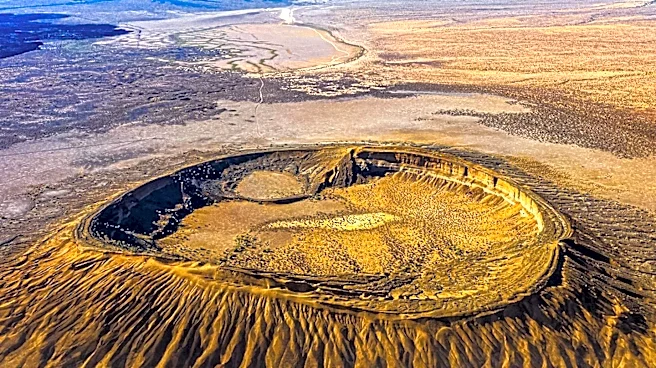
Meteor Crater in Northern Arizona, one of the best-preserved impact craters on Earth, has opened its 'Astronaut Trail' to the public for guided tours. This trail, which leads to the bottom of the crater, was historically used by NASA astronauts, including
Buzz Aldrin, Michael Collins, and Neil Armstrong, for training before their Apollo missions to the moon. The crater, formed by a meteorite impact approximately 50,000 years ago, is a mile wide and 570 feet deep. The site has been a focal point for scientific research and tourism, with a museum at the crater's rim detailing its history and significance. The trail offers visitors a chance to experience the unique landscape that once served as a realistic training ground for lunar missions.
Why It's Important?
The opening of the 'Astronaut Trail' to the public is significant as it provides a unique educational and historical experience, connecting visitors with a pivotal moment in space exploration history. This development enhances the site's appeal as a tourist destination, potentially boosting local tourism and economic activity. It also underscores the importance of preserving historical sites that contribute to scientific understanding and public education. The trail's availability allows for a deeper appreciation of the challenges faced by astronauts and the advancements in space exploration technology. This initiative may inspire interest in space science and history among visitors, fostering a greater appreciation for the achievements of the Apollo missions.
What's Next?
With the trail now open, it is expected that Meteor Crater will see an increase in visitor numbers, which could lead to further developments in infrastructure and amenities to accommodate tourists. The site may also attract more educational programs and collaborations with scientific institutions, enhancing its role as a center for learning and research. Additionally, the increased visibility and interest in the site could lead to further preservation efforts and funding opportunities to maintain and improve the facilities. Stakeholders, including local businesses and tourism boards, may explore partnerships to promote the site and integrate it into broader regional tourism strategies.
Beyond the Headlines
The opening of the 'Astronaut Trail' not only highlights the historical significance of Meteor Crater but also raises awareness about the broader implications of space exploration and its impact on technology and society. The site serves as a reminder of the human drive to explore and understand the universe, reflecting the cultural and scientific milestones achieved through space missions. It also poses questions about the preservation of historical sites and the balance between public access and conservation. As interest in space exploration continues to grow, sites like Meteor Crater play a crucial role in educating the public and inspiring future generations of scientists and explorers.