
What's Happening?
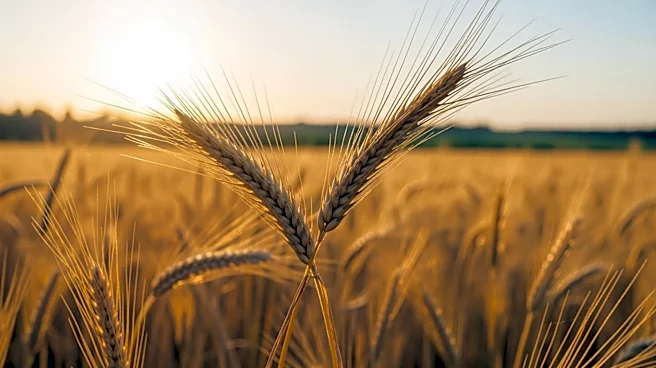
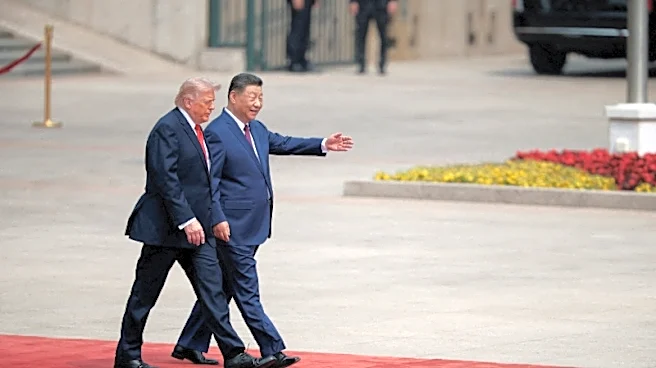
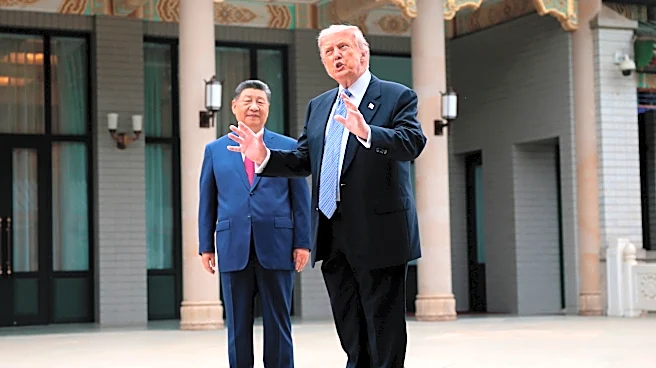
China has committed to purchasing at least $17 billion worth of U.S. agricultural products annually from 2026 through 2028. This agreement was reached during a summit between U.S. President Donald Trump
and Chinese President Xi Jinping in Beijing. The White House announced that the purchases will include various agricultural goods such as soybeans, corn, sorghum, pork, cotton, animal feed, and dairy products. Additionally, China will restore market access for U.S. beef and resume imports of poultry from states deemed free of avian influenza by the U.S. Department of Agriculture. The summit also resulted in the establishment of two new bodies, the US-China Board of Trade and the US-China Board of Investment, to manage trade and investment between the two countries. However, the Chinese government has not yet confirmed these commitments.
Why It's Important?
The agreement signifies a potential boost for the U.S. agricultural sector, which has been affected by previous trade tensions between the two countries. While the $17 billion annual purchase is a positive development, experts like Deborah Elms from the Hinrich Foundation caution that the impact on the overall U.S. economy, valued at $30 trillion, will be minor. The deal also reflects ongoing efforts to stabilize and enhance economic cooperation between the U.S. and China, despite broader geopolitical tensions. The agricultural sector, particularly soybean producers, stands to benefit from increased exports, potentially alleviating some of the economic pressures faced in recent years.
What's Next?
The next steps involve monitoring the implementation of the agreement and any official confirmation from the Chinese government. The establishment of the US-China Board of Trade and the US-China Board of Investment could lead to further negotiations and agreements aimed at strengthening bilateral trade relations. Stakeholders in the U.S. agricultural sector will be keenly observing the developments to assess the real impact on their businesses. Additionally, the broader geopolitical context, including issues like Taiwan and Iran, may influence future trade discussions and agreements between the two nations.