
What's Happening?
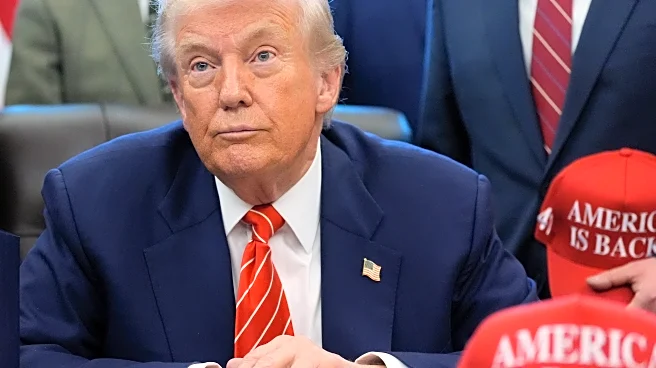
President Trump has introduced a new National Security Strategy, dubbed the 'Donroe Doctrine,' which emphasizes U.S. dominance in the Western Hemisphere. This strategy is seen as a modern extension of
the Monroe Doctrine, aiming to prevent foreign powers from gaining control over strategic assets in the region. The recent U.S. military operation in Venezuela has intensified discussions about the implications of this doctrine, particularly concerning China's influence in Latin America. The strategy highlights the U.S. commitment to maintaining access to key locations and denying non-hemispheric competitors control over vital assets. China's strategic approach in Latin America, outlined in its third Policy Paper, focuses on long-term goals and institutional influence, contrasting with the U.S.'s episodic interventions.
Why It's Important?
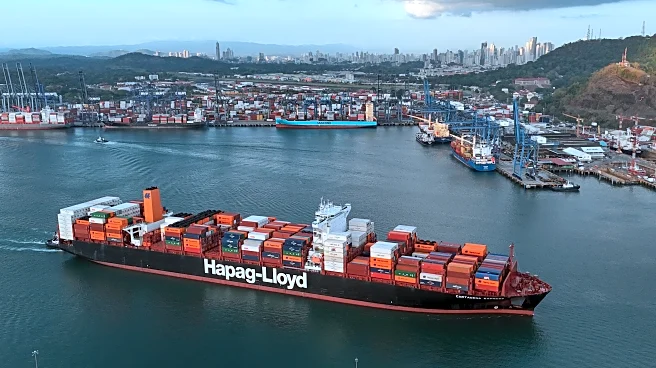
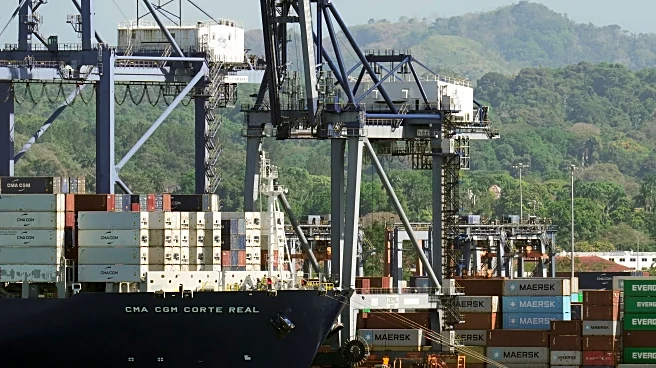
The 'Donroe Doctrine' represents a significant shift in U.S. foreign policy, potentially escalating tensions with China, which views itself as a global power with interests in Latin America. The doctrine's emphasis on U.S. dominance could lead to increased geopolitical competition in the region, affecting trade, investment, and diplomatic relations. China's deep-rooted influence in Latin America, through economic and political engagement, poses a challenge to U.S. efforts to reassert control. The strategy's focus on strategic locations like the Panama Canal underscores the potential for conflict over critical infrastructure, impacting global trade routes and regional stability.
What's Next?
The implementation of the 'Donroe Doctrine' may lead to further U.S. military and economic actions in Latin America, potentially provoking responses from China. Both nations are likely to continue expanding their influence in the region, with the U.S. seeking to counter China's strategic partnerships and investments. The situation could lead to diplomatic negotiations or confrontations over control of strategic assets. Regional countries may face pressure to align with either the U.S. or China, affecting their economic and political landscapes.
Beyond the Headlines
The 'Donroe Doctrine' raises ethical and legal questions about the U.S.'s right to assert dominance in Latin America. It challenges the principles of sovereignty and non-interference, potentially setting a precedent for similar actions in other regions. The doctrine's focus on military and economic power highlights the ongoing struggle for global influence between the U.S. and China, with implications for international law and order. The strategy's impact on regional alliances and partnerships could reshape the geopolitical landscape, influencing global power dynamics.