


What's Happening?
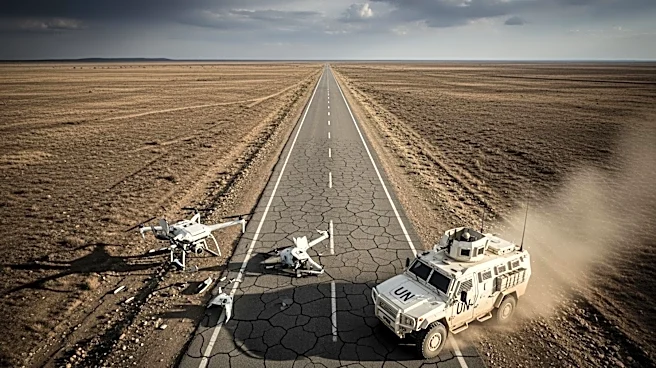
A United Nations humanitarian convoy was struck by Russian FPV drones in Kherson, Ukraine, on May 14, 2026. The attack occurred while the convoy was delivering aid to civilians in one of the hardest-hit areas of Kherson. Despite the clear markings on the vehicles
and prior coordination with both Russian and Ukrainian authorities, the UN has not been able to identify the party responsible for the attack. The incident was captured on video and circulated by Russian Telegram channels, which often publish footage of drone operations in the region. Ukrainian officials, including Oleksandr Prokudin, head of the Kherson Oblast Military Administration, have labeled the strike a deliberate attack by Russian forces. This marks the second such incident within a week, raising concerns about the safety of humanitarian missions in the area.
Why It's Important?
The attack on the UN convoy highlights the ongoing risks faced by humanitarian missions in conflict zones, particularly in Ukraine. The inability of the UN to identify the perpetrators underscores the challenges in ensuring accountability and adherence to international humanitarian law. This incident could further strain relations between Russia and international organizations, potentially impacting the delivery of aid to affected regions. The repeated targeting of humanitarian convoys may deter future missions, exacerbating the humanitarian crisis in Ukraine. Additionally, the attack raises questions about the effectiveness of international oversight and the protection of non-combatants in war zones.
What's Next?
The UN and other international bodies may call for investigations into the attack to determine accountability and prevent future incidents. Increased security measures for humanitarian missions could be implemented, although this may not fully mitigate the risks. The international community might pressure Russia to adhere to international laws protecting humanitarian efforts. Meanwhile, Ukrainian officials are likely to continue documenting and publicizing such attacks to garner international support and condemnation of Russian actions.