
What's Happening?
Over 2,000 seabirds, primarily common murres, have died from starvation along California beaches, a phenomenon attributed to the El Niño weather pattern and climate change. The California Department of
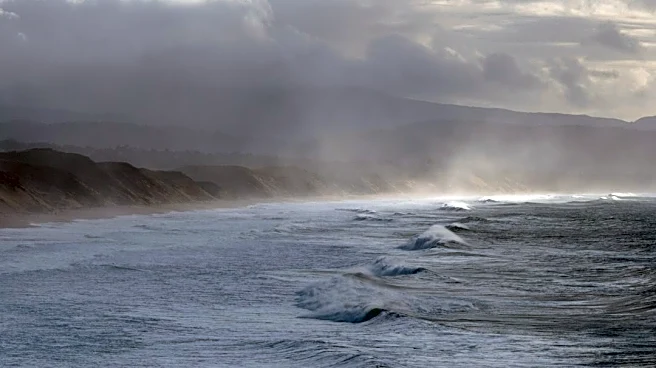
Fish and Wildlife (CDFW) confirmed on March 27, 2026, that starvation is the primary cause of these increased mortalities, ruling out avian flu. Researchers, including those cited by National Geographic, view this as part of a broader issue across the Pacific Ocean. The warmer ocean temperatures, with Monterey Bay experiencing temperatures 13 degrees Fahrenheit higher than average, are disrupting marine life. This ecological shift has led to unusual occurrences, such as warm-water sea turtles nesting on Southern California beaches and disoriented dolphins in the Morro Bay estuary. Wildlife hospitals, like International Bird Rescue and Pacific Wildlife Care, are treating a record number of debilitated seabirds, indicating a significant environmental imbalance.
Why It's Important?
The mass starvation of seabirds in California highlights the severe ecological impact of climate change and El Niño on marine ecosystems. This event serves as a critical indicator of broader environmental distress, affecting not only seabird populations but also the entire food web in the Pacific Ocean. The disruption of marine life, including the availability of food sources for seabirds, can lead to cascading effects throughout the ecosystem. For U.S. coastal communities, particularly those reliant on marine resources or tourism, such ecological imbalances could have long-term economic and social consequences. The unprecedented number of birds requiring rescue and rehabilitation also strains wildlife conservation efforts and resources, underscoring the urgent need for climate action and environmental protection strategies.
What's Next?
The situation is predicted to intensify in the coming months as El Niño is expected to warm the ocean further, potentially affecting more species and in greater numbers, according to Tammy Russell, a marine ecologist at the Scripps Institution of Oceanography. Wildlife organizations will likely continue to face increased demands for rescue and rehabilitation efforts. Scientists will continue to monitor ocean temperatures and marine life to better understand the long-term impacts of these environmental changes. Policy discussions around climate change mitigation and adaptation strategies may gain renewed urgency in response to such visible ecological crises. Public awareness campaigns about the effects of climate change on local ecosystems may also increase.
Beyond the Headlines
The mass seabird starvation event in California underscores the interconnectedness of global climate patterns and local ecosystems. It serves as a stark reminder that climate change is not a distant threat but a present reality with tangible and devastating consequences for wildlife. The ethical implications of human-induced climate change leading to such widespread suffering among animal populations are profound, challenging societies to re-evaluate their environmental stewardship. This event also highlights the critical role of scientific research in understanding complex ecological shifts and informing conservation efforts. The long-term shifts triggered by such events could include permanent alterations to marine biodiversity and ecosystem stability, necessitating a fundamental re-thinking of human interaction with the natural world.