



What's Happening?
A new study conducted by the state of Oregon highlights the vulnerability of coastal communities, particularly Seaside, to tsunamis following a major Cascadia Subduction Zone earthquake. Oregon Emergency Management officials estimate that currently, only
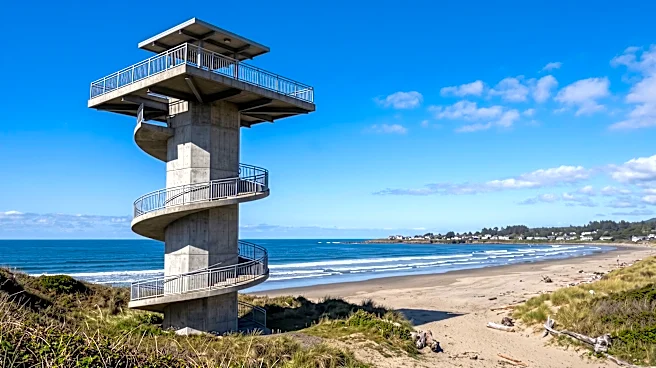
about 25% of individuals within the tsunami inundation zone in Seaside would be able to reach safety in time. In contrast, nearby Cannon Beach has an estimated 90% survival rate. The study proposes the construction of specially engineered evacuation towers as a critical measure to significantly improve survival rates in Seaside. These towers would provide artificial high ground closer to residents, offering a quicker escape route. The state suggests that a single tower could increase Seaside's estimated survival rate to 50%, and multiple structures could further boost it to 85%. The urgency of these measures is underscored by the fact that after a major earthquake, tsunami waves could reach coastal beaches within 10 to 20 minutes, leaving little time for evacuation.
Why It's Important?
This study is important because it addresses a critical public safety concern for Oregon's coastal population, directly impacting thousands of residents and tourists. The Cascadia Subduction Zone is a known seismic threat, and the potential for a devastating earthquake and subsequent tsunami poses a significant risk to life and property. The proposed evacuation towers represent a proactive infrastructure investment aimed at mitigating this risk. Improving survival rates from 25% to potentially 85% would save countless lives and reduce the long-term societal and economic impact of such a disaster. The findings could influence state and local policy decisions regarding emergency preparedness, urban planning, and funding allocations for coastal resilience projects. It also highlights the disparity in preparedness among different coastal communities, prompting a need for equitable solutions and resource distribution to protect all residents.
What's Next?
Following the release of this study, Oregon Emergency Management and local coastal communities, especially Seaside, are expected to evaluate the feasibility and funding mechanisms for implementing the recommended evacuation towers. This will likely involve detailed engineering studies, environmental impact assessments, and public consultations. Discussions will also focus on securing state and federal funding, potentially through grants or legislative appropriations, to finance the construction of these large-scale infrastructure projects. Furthermore, the study's findings may prompt a broader review of existing evacuation plans and public awareness campaigns in all vulnerable coastal areas. The state will likely continue to explore other complementary strategies, such as early warning systems and community-based preparedness programs, to enhance overall resilience against future seismic and tsunami events.
Beyond the Headlines
Beyond the immediate safety implications, the Oregon study on evacuation towers touches upon deeper issues of long-term disaster preparedness and the role of government in protecting its citizens from natural hazards. It highlights the ongoing challenge of balancing economic development in coastal areas with the inherent risks of living in seismically active regions. The concept of 'artificial high ground' could set a precedent for other vulnerable coastal communities across the U.S. and globally, prompting innovative solutions for disaster resilience. Ethically, it raises questions about equitable access to safety infrastructure, as some communities may have more resources to implement such projects than others. Culturally, it could foster a greater sense of community preparedness and collective responsibility, but also potentially lead to debates over land use, environmental impact, and the aesthetic integration of such structures into coastal landscapes.