






What's Happening?
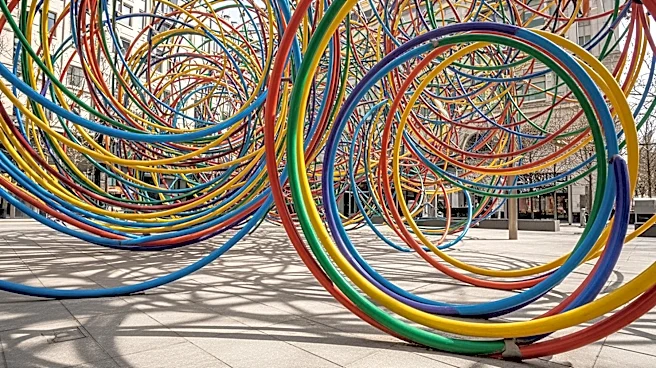
A new interactive public sculpture, 'Bead Maze,' has been installed at University Plaza in Union Square, New York. Designed by students from the Fashion Institute of Technology (FIT), the artwork is a large-scale reimagining of a doctor's waiting-room
toy. The installation features interactive plywood beads connected by bent steel pipes, with a color palette inspired by the Union Square Greenmarket. The project was realized through a collaboration with the Union Square Partnership and design collective Scale Rule, which works pro bono to bring student concepts to life. The sculpture measures 26.5 feet by 13 feet, with heights ranging from 3 to 12 feet, and invites visitors to engage with its twisting form. The installation is part of Union Square's evolving public arts program, which aims to enrich the neighborhood and provide visibility for emerging artists.
Why It's Important?
The 'Bead Maze' installation highlights the importance of public art in urban spaces, offering a platform for student creativity and community engagement. By involving students in the design and execution of public art, the project fosters a sense of ownership and connection to the community. It also underscores the role of public spaces as venues for artistic expression and cultural exchange. The collaboration between FIT, Scale Rule, and the Union Square Partnership exemplifies how educational institutions can partner with local organizations to enhance public spaces and support emerging artists. This initiative not only enriches the cultural landscape of Union Square but also encourages public interaction with art, promoting a vibrant and inclusive community environment.
What's Next?
The 'Bead Maze' will be on display through November 2026, providing ample opportunity for public interaction and engagement. The success of this project may inspire similar collaborations between educational institutions and local organizations, further integrating art into public spaces. The Union Square Partnership plans to continue its support for public art initiatives, potentially expanding its program to include more diverse and innovative projects. As the installation attracts visitors, it may also stimulate discussions about the role of art in urban development and community building, encouraging other neighborhoods to adopt similar approaches to public art.