

What's Happening?
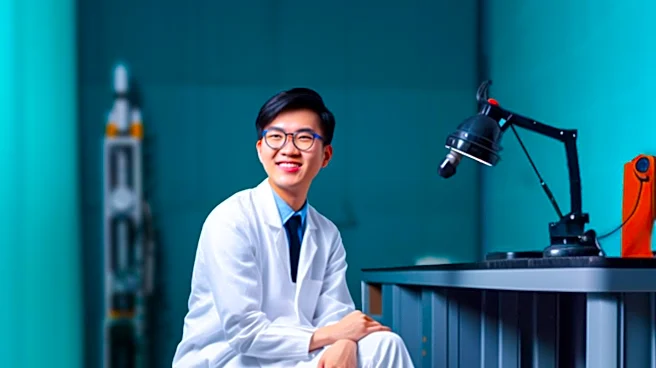
Electrochemist Liu Jiawei has established her own research laboratory at City University of Hong Kong (CityU) two years after relocating from Singapore. Liu, who spent a decade in Singapore's research ecosystem, chose Hong Kong to be closer to her family
in mainland China while maintaining an international, high-standard research environment. She completed her bachelor's degree in chemical engineering and earned her PhD in materials science and engineering at Nanyang Technological University (NTU) in 2021. Liu highlighted that Hong Kong's academic landscape operates on an independent principal investigator model, granting researchers significant autonomy in directing their labs and research. The city also actively promotes cross-group collaboration, leading to frequent joint projects among various research teams. Liu noted the similarities in research environment and academic atmosphere between Singapore and Hong Kong, emphasizing their diversity and connections to both mainland China and the West.
Why It's Important?
This development underscores Hong Kong's continued efforts to attract and retain top scientific talent, positioning itself as a competitive hub for advanced research in Asia. The independent principal investigator model, coupled with strong encouragement for collaboration, fosters an environment conducive to scientific innovation and discovery. For the U.S., this signifies the ongoing global competition for scientific leadership and the importance of maintaining robust research ecosystems to attract and retain talent. The ability of regions like Hong Kong to offer both academic freedom and strategic geographical connections could influence the flow of scientific expertise and research partnerships, potentially impacting the U.S.'s own scientific and technological advancements. The emphasis on diversity and international connections in Hong Kong's research environment also highlights the globalized nature of scientific progress, where cross-border collaborations are increasingly vital for addressing complex challenges.
What's Next?
Liu Jiawei will continue to develop her research group at CityU, focusing on her specialized field of electrochemistry. Her presence is expected to contribute to CityU's research output and potentially attract further talent and funding to the institution. The success of her lab could serve as a model for other researchers considering Hong Kong as a base for their scientific endeavors. The city's academic institutions will likely continue to promote their independent principal investigator model and collaborative opportunities to draw more international scientists. This ongoing recruitment of high-caliber researchers like Liu could further solidify Hong Kong's reputation as a significant player in global scientific research, potentially leading to new discoveries and technological advancements that could have broader international implications.
Beyond the Headlines
The move by Liu Jiawei to Hong Kong, driven by both professional opportunity and personal proximity to family in mainland China, reflects a broader trend of talent mobility in the global scientific community. While Hong Kong offers an independent research environment, its increasing integration with mainland China could present both opportunities and challenges for academic freedom and international collaboration in the long term. The ability of Hong Kong to balance its unique academic autonomy with its geopolitical realities will be crucial for its sustained appeal to top-tier researchers. This situation also highlights the complex interplay between scientific advancement, national policies, and individual career choices in a rapidly evolving global landscape, where researchers weigh factors beyond just scientific infrastructure when choosing their professional homes.