





What's Happening?
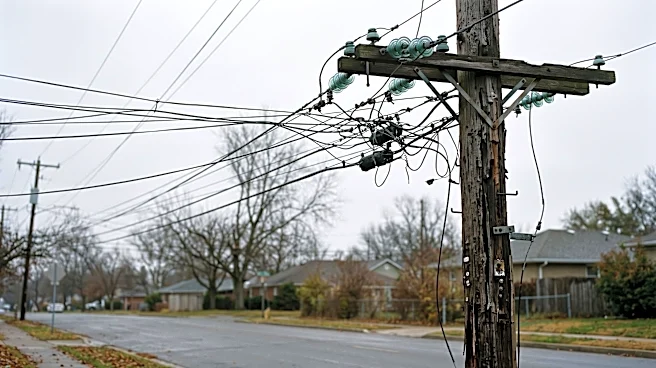
The City of Lakewood is maintaining an aggressive stance against FirstEnergy due to ongoing issues with prolonged power outages and an unreliable electrical grid. For the past two years, residents and businesses in Lakewood have experienced significant
disruptions, prompting the city to pursue legal action through the Public Utilities Commission of Ohio (PUCO). FirstEnergy's CEO, Brian Tierney, has acknowledged that Lakewood's power grid is 'too old' and requires replacement, estimating a seven to nine-year timeline for a full upgrade. In response, the City of Lakewood has updated its complaint to PUCO, demanding that FirstEnergy implement short-term emergency capacity to address outages more swiftly. Additionally, the city has formally intervened in a PUCO proceeding to oppose FirstEnergy's application for a rate increase, arguing that the utility should not be allowed to raise rates given its failure to provide reliable service. A recent City Council meeting saw FirstEnergy officials provide details on their plans for Lakewood, emphasizing transparency and public review.
Why It's Important?
The ongoing dispute between Lakewood and FirstEnergy highlights critical issues concerning utility accountability, infrastructure investment, and consumer protection in the U.S. energy sector. For Lakewood residents, the unreliable power supply directly impacts daily life, economic activity, and public safety. The city's legal and public pressure on FirstEnergy underscores a broader challenge faced by many communities with aging infrastructure. If successful, Lakewood's efforts could set a precedent for other municipalities to demand better service and more transparent investment from utility providers. The opposition to FirstEnergy's rate increase application is particularly significant, as it challenges the notion that utilities can raise prices without first ensuring adequate service. This situation also brings to light the potential for regulatory bodies like PUCO to enforce utility obligations and protect consumers from bearing the cost of neglected infrastructure.
What's Next?
The City of Lakewood will continue its legal strategy through the Public Utilities Commission of Ohio (PUCO) and maintain pressure on FirstEnergy. FirstEnergy is expected to develop a comprehensive plan, including short-term and long-term strategies, by the end of the year, as required by PUCO. This plan will detail estimated useful life of equipment, a specific asset replacement list, and a timeline, along with quarterly status reports. FirstEnergy has also committed to improving communication by disabling inaccurate automated Estimated Time of Restoration (ETR) notices for Lakewood customers and launching a dedicated project map webpage to track project progress. The City Council anticipates FirstEnergy returning to the Committee of the Whole once the comprehensive plan receives formal approval from PUCO. Additionally, PUCO has directed FirstEnergy to provide a list of specific near-term investments to prevent heat-related outages before June 1, 2027.
Beyond the Headlines
This situation in Lakewood extends beyond immediate power outages, touching upon the broader implications of deferred infrastructure maintenance and the evolving relationship between utility companies, regulatory bodies, and the communities they serve. The admission by FirstEnergy's CEO that the grid is 'too old' reflects a systemic issue in many parts of the U.S., where critical infrastructure is aging and underinvested. The city's proactive legal and public engagement strategy could inspire other communities to adopt similar approaches, fostering greater accountability from utility providers. Furthermore, the debate over rate increases in the face of service failures raises ethical questions about who bears the financial burden of infrastructure modernization—consumers or shareholders. This case could influence future regulatory decisions regarding utility investments, service standards, and the mechanisms for consumer recourse, potentially leading to more stringent oversight and requirements for infrastructure upgrades across the nation.