




What's Happening?
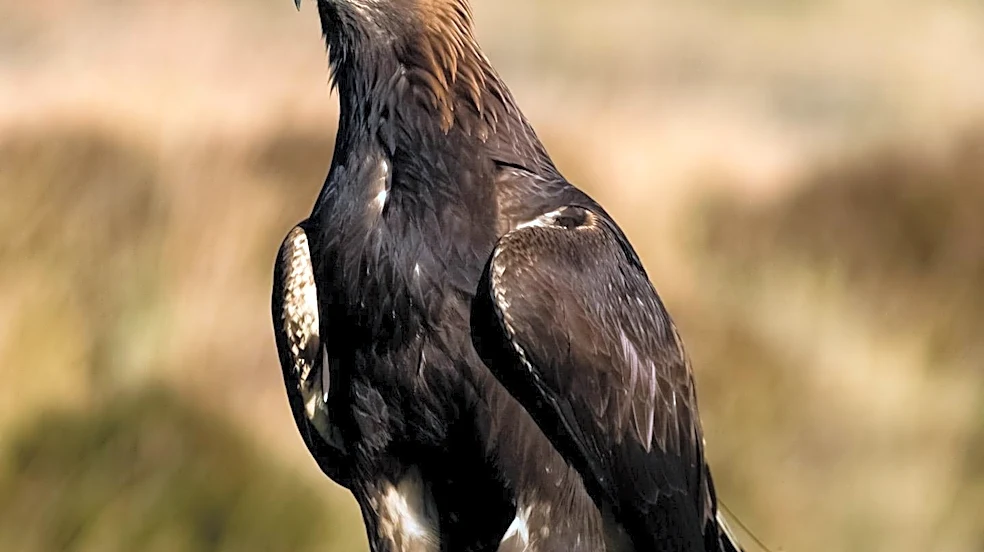
Actors Sam Heughan and Dame Judi Dench have participated in the South of Scotland Golden Eagle Project by naming two golden eagle fledglings. Dame Judi Dench named her fledgling 'GoldenEye,' a reference to her role as M in the James Bond film series.
Sam Heughan named his fledgling 'Sassy,' a nod to his Sassenach Whisky brand. This initiative is part of a broader conservation effort by the charity Restoring Upland Nature (Run) to re-establish the golden eagle population in southern Scotland. This summer, five birds have fledged within the project, with four being direct descendants of eagles previously translocated to the area. The project has successfully increased the golden eagle population in the region to over 50 birds, marking the highest number in three centuries. Dr. Cat Barlow, chief executive of Restoring Upland Nature, highlighted the significance of these successful fledglings as a milestone in restoring the species.
Why It's Important?
The involvement of prominent figures like Sam Heughan and Dame Judi Dench brings significant public attention to wildlife conservation efforts, particularly for endangered species like the golden eagle. Their participation helps raise awareness about biodiversity decline and the importance of healthy ecosystems. The success of the South of Scotland Golden Eagle Project demonstrates that targeted conservation strategies, including translocation and habitat restoration, can effectively reverse population declines. This project serves as a model for similar initiatives globally, offering hope that endangered species can be successfully reintroduced and thrive in their native habitats. The increase in the golden eagle population also signifies a healthier ecosystem in southern Scotland, as golden eagles are apex predators whose presence indicates a balanced environment. This success can inspire further investment and public support for conservation programs.
What's Next?
The South of Scotland Golden Eagle Project will likely continue its efforts to monitor and support the growing golden eagle population. Future steps may include further translocations, habitat management, and community engagement to ensure the long-term sustainability of the species in the region. The project's success could also encourage other conservation organizations to adopt similar strategies for other endangered raptors or wildlife. Continued public awareness campaigns, potentially involving more public figures, could further bolster support and funding for these initiatives. The project's data on successful breeding and integration of translocated eagles will be crucial for informing future conservation practices across Scotland, England, and Wales, aiming to expand the golden eagle's range and numbers.
Beyond the Headlines
The success of the South of Scotland Golden Eagle Project extends beyond mere population numbers; it represents a significant cultural and ecological restoration. The return of golden eagles to the region after centuries signifies a rebalancing of nature and a reconnection with Scotland's wild heritage. Ethically, it underscores humanity's responsibility to protect and restore biodiversity, especially for species impacted by historical human activities. The project also highlights the power of collaboration between conservationists, local communities, and public figures in achieving ambitious environmental goals. This initiative could foster a deeper appreciation for wildlife and wilderness among the public, potentially influencing policy decisions towards greater environmental protection and sustainable land management practices. It serves as a testament to the idea that with concerted effort, ecological damage can be reversed, leading to a richer, more biodiverse future.