

What's Happening?
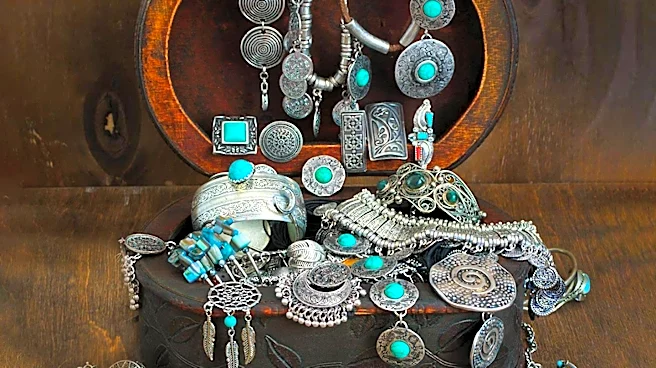
Denmark's largest known Viking Age silver hoard has been unearthed in a garden in Rebild, northern Denmark, by an anonymous man building a new terrace. The treasure trove consists of 700 objects and fragments from the 10th century, totaling almost 18.5kg
of silver. This discovery is three times larger than the previous record holder, the Terslev Hoard. The hoard includes silver bars, bracelets, 47 whole coins and fragments, a small Thor's hammer, and various cut silver objects, all originally deposited within a clay vessel. One of the silver bars features runes that may spell 'hutu,' possibly a name or owner's mark, and some coins bear Arabic inscriptions. Torben Sarauw, an archaeologist and head of cultural heritage at the North Jutland Museum, emphasized the hoard's significance in providing insight into the Viking Age silver economy, where silver served as both coinage and weighed bullion for trade, payments, and wealth storage. The discovery sheds light on a pivotal period in Danish history when the kingdom was forming and Christianity was spreading across Scandinavia, indicating profound political and religious changes.
Why It's Important?
This discovery is exceptionally important for understanding the Viking Age economy and societal transformations in Scandinavia. The sheer size of the hoard, at nearly 18.5kg, offers unprecedented insight into the scale of wealth accumulation and trade networks during that era. The presence of both runic inscriptions and Arabic coins highlights the extensive cultural and economic connections of the Vikings, demonstrating their engagement with diverse regions beyond Scandinavia. For historians and archaeologists, this hoard provides tangible evidence of how silver functioned not just as currency but also as a commodity for trade and a means of storing wealth, offering a more nuanced view of Viking economic practices. Furthermore, the context of its burial—during the formation of the Danish kingdom and the spread of Christianity—underscores the profound political and religious shifts occurring at the time, making it a crucial artifact for studying the transition from paganism to Christianity and the consolidation of state power in Denmark.
What's Next?
Following its discovery, the silver hoard will undergo thorough documentation by experts. The North Jutland Museum plans to exhibit the hoard at Fyrkat, a Viking Age museum and UNESCO World Heritage ring fortress associated with King Harald Bluetooth. This exhibition will allow the public to view the artifacts and learn more about their historical context. Researchers will likely continue to analyze the objects, including the runic inscriptions and Arabic coins, to glean further insights into Viking Age trade routes, economic systems, and cultural interactions. The discovery may also prompt further archaeological investigations in the Rebild area, as such significant finds often indicate the presence of other historical sites or artifacts. The museum's efforts will focus on preserving the hoard and presenting its story to a wider audience, contributing to a deeper understanding of Denmark's rich Viking heritage.
Beyond the Headlines
The discovery of this Viking Age silver hoard transcends its immediate archaeological value, offering deeper insights into the human experience of wealth, power, and cultural exchange. The act of burying such a vast treasure suggests a period of instability or a deliberate attempt to secure assets during a time of significant upheaval, reflecting the anxieties and strategies of people living through profound political and religious transitions. The blend of local runic elements with foreign Arabic coinage illustrates the complex tapestry of Viking identity, which was far from insular, embracing global trade and cultural influences. This hoard serves as a powerful reminder that historical narratives are constantly being reshaped by new discoveries, challenging preconceived notions and enriching our understanding of past societies. It also highlights the enduring human connection to material wealth and the ways in which societies have historically managed and protected their assets, even in the face of dramatic change.