
What's Happening?
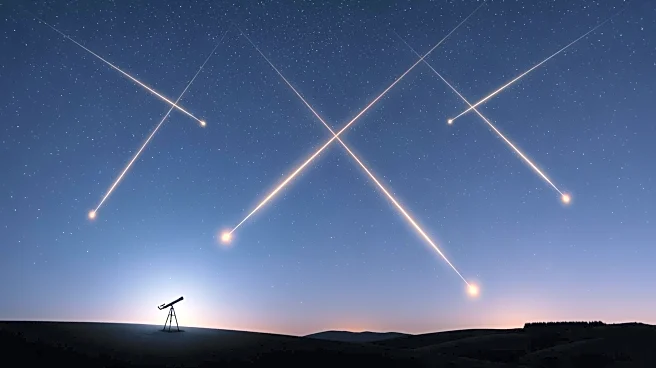
The Perseids meteor shower, one of the most prolific meteor showers of the year, is set to peak on the night of August 12, 2026, continuing into the early hours of August 13. This annual celestial event is associated with the comet Swift-Tuttle and is known
for producing bright, rich streaks across the sky. The shower's radiant rises in the northeast by late evening and climbs higher through the night, making the hours before dawn the most productive for viewing. In 2026, the peak will occur under a new moon, ensuring dark skies that will enhance visibility, allowing even faint meteors to be seen. The Perseids are active from mid-July to late August, providing ample opportunity for skywatchers to catch a glimpse of this spectacular display.
Why It's Important?
The Perseids meteor shower is a significant event for both amateur and professional astronomers, as well as the general public. Its occurrence under a new moon in 2026 means that there will be minimal light interference, offering optimal conditions for viewing. This enhances the educational and recreational value of the event, encouraging public interest in astronomy and science. The Perseids also provide an opportunity for scientific study, as observing the shower can yield insights into the composition and behavior of cometary debris. The event is a reminder of the dynamic nature of our solar system and the ongoing interactions between Earth and celestial bodies.
What's Next?
As the Perseids approach their peak, astronomers and enthusiasts are likely to prepare for observation sessions, setting up telescopes and cameras in areas with minimal light pollution. Public observatories and science centers may organize viewing events to engage the community and provide educational resources. Following the peak, data collected from observations could be analyzed to study the characteristics of the meteors and their parent comet, Swift-Tuttle. This analysis could contribute to a better understanding of cometary behavior and the potential impact of such celestial events on Earth.