


What's Happening?
Ukrainian drone attacks have severely disrupted operations at the Russian oil port of Ust-Luga, reducing its export activity to nearly zero. According to maritime intelligence firm Windward, Ust-Luga typically exports about 700,000 barrels of oil per day,
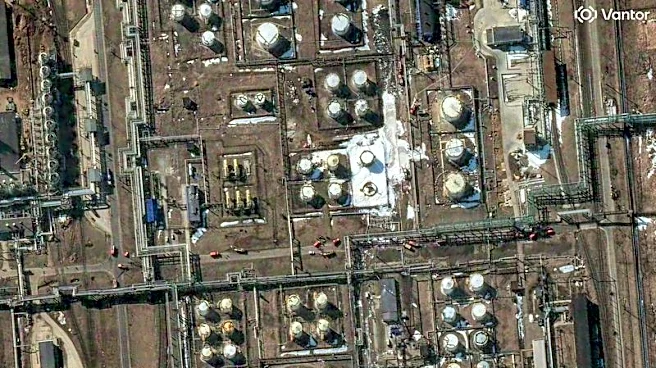
but recent attacks have halted exports for five consecutive days. The nearby Primorsk terminal, which usually loads about one million barrels per day, continues to operate despite damage to its storage tanks. Satellite images from March 27 show significant fires at Ust-Luga, with multiple oil storage tanks ablaze. The fires have been confirmed by TankerTrackers.com, which reported that the fires are too close to the loading berths, preventing any loading activities. Ukrainian President Volodymyr Zelensky mentioned that some allies have requested a halt in attacks on Russian energy infrastructure due to rising oil costs.
Why It's Important?
The disruption at Ust-Luga comes at a critical time when global energy supplies are already strained due to ongoing conflicts in the Arabian Gulf. The halt in Russian oil exports could exacerbate the situation, potentially leading to higher crude oil prices worldwide. This development is significant for the U.S. and other countries reliant on stable oil prices for economic stability. The situation underscores the interconnectedness of global energy markets and the potential for regional conflicts to have far-reaching economic impacts. The request from Ukraine's allies to halt attacks highlights the delicate balance between military strategy and economic consequences.
What's Next?
The ongoing situation at Ust-Luga and Primorsk could lead to further diplomatic discussions between Ukraine and its allies regarding military strategies and their economic implications. If the fires at Ust-Luga are not contained soon, the disruption in oil exports could continue, further impacting global oil prices. Stakeholders in the energy sector, including governments and oil companies, will likely monitor the situation closely to assess the need for alternative supply routes or increased production elsewhere to stabilize the market.
Beyond the Headlines
The attacks on Ust-Luga highlight the vulnerability of critical energy infrastructure in conflict zones. This situation may prompt countries to reassess the security of their energy supply chains and consider diversifying their energy sources to mitigate risks. Additionally, the incident raises ethical questions about the targeting of energy infrastructure in military conflicts and the broader implications for civilian populations dependent on stable energy supplies.