






What's Happening?
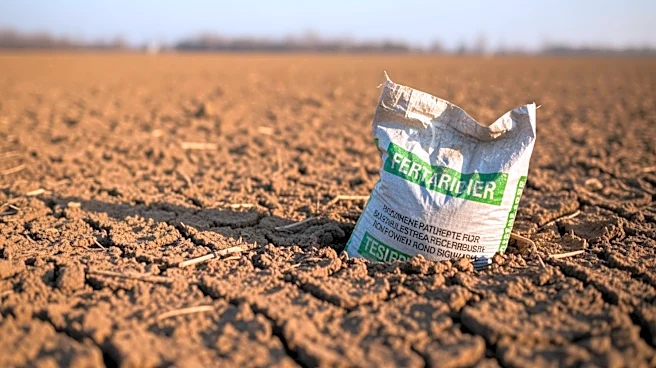
The ongoing conflict involving the U.S. in Iran has led to a significant increase in fertilizer prices, posing a challenge for American farmers as the planting season begins. According to a survey by the American Farm Bureau Federation, 70% of farmers report
being unable to afford the necessary fertilizer due to these rising costs. This situation is exacerbated by the virtual closure of the Strait of Hormuz, a critical trade route for global fertilizer supplies. The strait's closure has disrupted the flow of essential chemicals like urea and ammonia, which are vital for crop growth. As a result, farmers across the U.S., particularly in the South and Northeast, are struggling to maintain their usual fertilization practices, potentially leading to reduced crop yields and higher food prices.
Why It's Important?
The increase in fertilizer prices could have a ripple effect on the U.S. economy, particularly in the agricultural sector. With reduced crop yields, food prices are likely to rise, impacting consumers nationwide. This situation also places financial strain on farmers, many of whom are already facing economic challenges. The disruption in fertilizer supply chains highlights the vulnerability of global trade routes and their impact on domestic agriculture. Additionally, the rising diesel prices, which have surged by 46% since February, further increase the cost of farming operations, affecting fieldwork, transportation, and irrigation. These combined factors could lead to significant economic repercussions for both producers and consumers.
What's Next?
In response to these challenges, the U.S. Department of Agriculture (USDA) plans to investigate potential collusion among fertilizer producers to artificially raise prices. The USDA is also developing an online platform for farmers to report issues with agricultural suppliers confidentially. This initiative aims to gather data and potentially involve the Federal Trade Commission and the Justice Department if necessary. The outcome of these investigations could lead to regulatory actions to stabilize fertilizer prices and support farmers. Meanwhile, farmers may need to adjust their crop production strategies to cope with the increased costs and limited fertilizer availability.