


What's Happening?
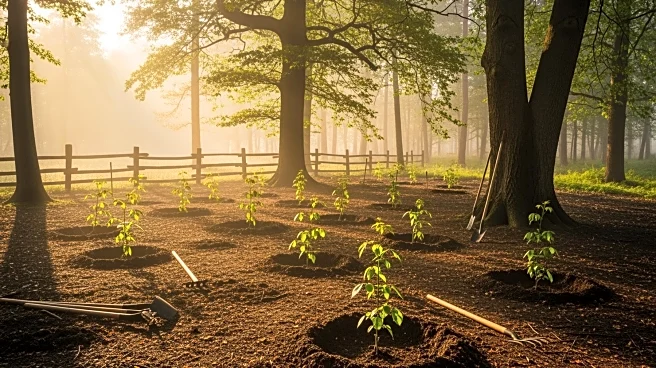
A global meta-analysis has revealed that ecologically optimized intercropping can significantly enhance cereal production by up to 51% on existing agricultural land. The study highlights the importance of precision intercropping strategies, which involve
optimizing planting density and temporal niche differentiation to improve yield outcomes. The research underscores the context-dependent nature of intercropping benefits, suggesting that tailored approaches are necessary to maximize productivity. This analysis provides a quantitative framework linking functional traits and management practices to predict intercropping success, offering a promising avenue for meeting future food demands.
Why It's Important?
The findings of this study are crucial for addressing global food security challenges. By demonstrating the potential of intercropping to increase yields without expanding agricultural land, the research supports sustainable agricultural practices that can mitigate the environmental impact of farming. This approach aligns with global efforts to enhance food production while preserving natural resources. The adoption of precision intercropping strategies could lead to more resilient agricultural systems, capable of adapting to climate change and reducing dependency on chemical inputs.
What's Next?
The next steps involve translating these research findings into practical applications for farmers worldwide. This will require collaboration between researchers, agricultural extension services, and policymakers to develop guidelines and support systems for implementing precision intercropping strategies. Additionally, further research is needed to refine these strategies for different crop combinations and environmental conditions. The success of these efforts will depend on the ability to integrate scientific insights with local farming practices and knowledge.
Beyond the Headlines
The study's emphasis on precision intercropping highlights a shift towards more data-driven and scientifically informed agricultural practices. This approach not only promises to enhance productivity but also encourages a more holistic understanding of agroecosystems. By focusing on ecological interactions and functional traits, precision intercropping represents a move towards more sustainable and resilient farming systems. This could lead to long-term shifts in agricultural policy and practice, promoting biodiversity and ecosystem health alongside food production.