





What's Happening?
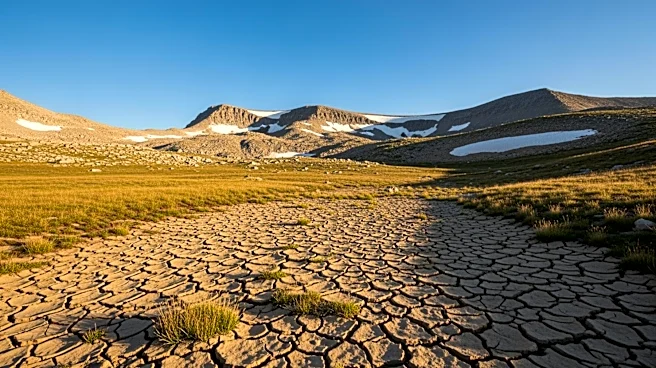
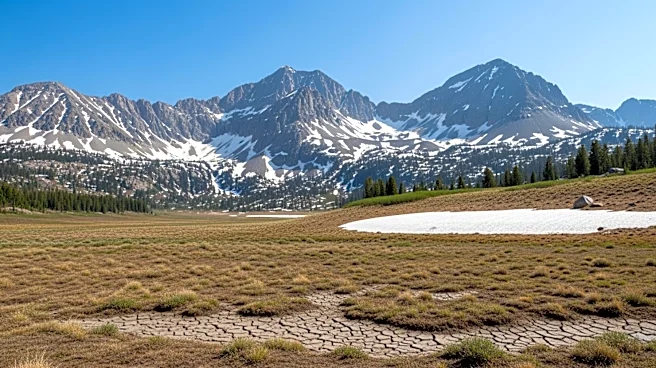
The Western United States is experiencing significant agricultural challenges due to low snowpack levels, which are far below historical averages. Snowpack serves as a crucial water reserve, feeding rivers and farms during spring and summer. This year,
several Western states report snow levels as low as 10% of normal, leading to reduced runoff into rivers and reservoirs. Consequently, water managers are cutting irrigation allocations, leaving farmers uncertain about water availability throughout the growing season. This situation forces crop farmers to plant fewer acres or focus on high-value crops, while orchard and vineyard growers may have to remove trees or vines, resulting in long-term losses. Livestock producers face increased feed costs and may reduce herd sizes due to poor pasture conditions.
Why It's Important?
The Western United States is a vital contributor to national food production, supplying most of the country's fruits, vegetables, and tree nuts, along with significant portions of dairy, cattle, wheat, and hay. The current water shortage threatens these sectors, potentially leading to reduced domestic production and increased reliance on imported goods, which could raise costs and supply risks. The agricultural challenges posed by low snowpack levels may have lasting effects on food systems, impacting both current production and future supply.
What's Next?
Farmers and ranchers in the Western US must make difficult decisions regarding crop planting and livestock management due to water shortages. Without improved water conditions, these choices could reshape food production for years to come. Stakeholders may need to explore alternative water management strategies or seek government assistance to mitigate the impact of low snowpack levels.