
What's Happening?
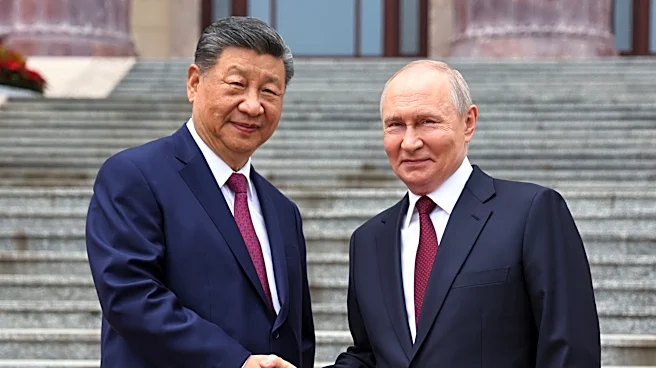
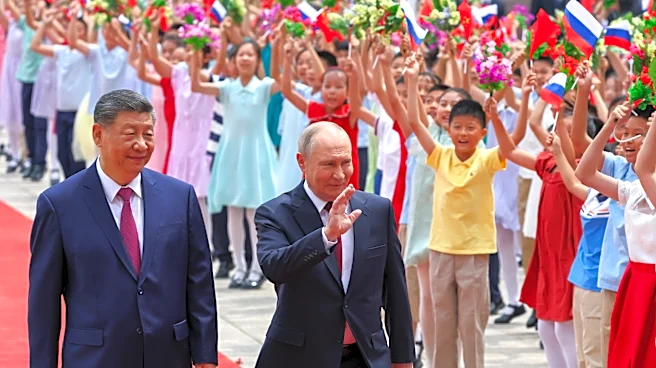
Russian President Vladimir Putin and Chinese President Xi Jinping have reinforced their strategic partnership during a summit in Beijing. The meeting, which follows a visit by U.S. President Donald Trump
to China, focused on enhancing cooperation in energy and other sectors. The leaders signed over 40 agreements, emphasizing trade, technology, and media exchanges. They highlighted the importance of their growing trade relationship, particularly in oil and natural gas, amid global geopolitical tensions. The summit also included discussions on international relations, with both leaders criticizing unilateral actions by some countries and advocating for a more balanced global governance system.
Why It's Important?
The strengthening of ties between China and Russia has significant implications for global geopolitics and energy markets. As both countries face Western sanctions, their partnership serves as a counterbalance to U.S. influence. The collaboration in energy, particularly the potential Power of Siberia 2 gas pipeline, could shift energy supply dynamics, especially with ongoing conflicts affecting global oil and gas markets. This partnership also underscores a strategic alignment that could influence international relations, trade policies, and economic stability, particularly in regions dependent on Russian energy supplies.
What's Next?
The continuation of this partnership is likely to impact global energy markets and geopolitical alliances. The proposed Power of Siberia 2 pipeline, if realized, could enhance Russia's role as a key energy supplier to China, potentially affecting global energy prices and supply chains. Additionally, the alignment between China and Russia may prompt responses from Western countries, possibly leading to shifts in diplomatic and economic strategies. The ongoing dialogue between these nations and their interactions with the U.S. will be crucial in shaping future international relations.