



What's Happening?
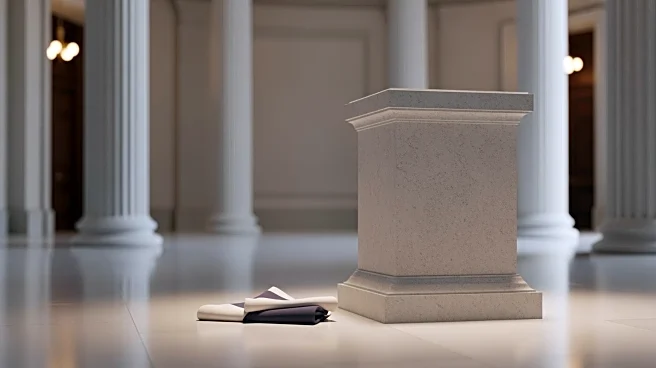
As the fifth anniversary of the January 6, 2021, Capitol attack approaches, a plaque intended to honor the law enforcement officers who defended the Capitol remains missing. Despite being mandated by law, the plaque has not been displayed, and its whereabouts
are unknown. House Speaker Mike Johnson has not formally unveiled it, and the Trump administration's Department of Justice is seeking to dismiss a lawsuit filed by officers demanding its display. In response, some members of Congress have created replicas to honor the officers' bravery.
Why It's Important?
The absence of the plaque raises concerns about the recognition and remembrance of the events of January 6. It highlights the ongoing political divide over the interpretation and commemoration of the attack. The lack of a formal memorial could contribute to a culture of forgetting, allowing alternative narratives to emerge. This situation underscores the importance of acknowledging historical events to preserve democratic values and honor those who defended them. The controversy also reflects broader tensions in U.S. politics regarding accountability and historical memory.
What's Next?
The lawsuit filed by officers Harry Dunn and Daniel Hodges may continue to unfold in the courts, potentially leading to a legal resolution regarding the plaque's display. The situation could prompt further discussions in Congress about the importance of commemorating January 6 and the role of memorials in preserving history. As the anniversary approaches, there may be renewed efforts to address the plaque's absence and ensure that the events of January 6 are appropriately recognized and remembered.
Beyond the Headlines
The missing plaque highlights the challenges of reconciling differing perspectives on historical events and the role of memorials in shaping public memory. It raises questions about how societies choose to remember and honor significant events and the impact of these choices on national identity and unity. The situation may prompt broader discussions about the importance of historical memory in maintaining democratic values and the need for inclusive and accurate representations of history in public spaces.