
What's Happening?
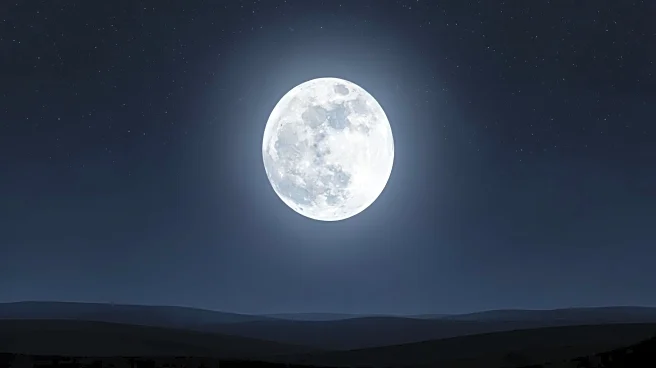
Space.com has outlined a series of significant lunar events set to occur in 2026, offering skywatchers a variety of celestial phenomena to observe. The year will feature three supermoons, with the first
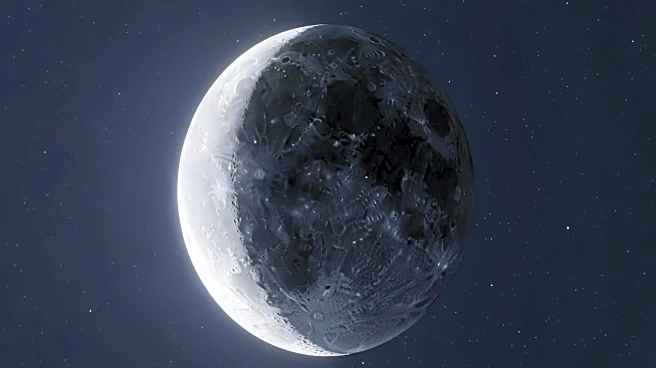
appearing on January 3, 2026. A notable event is the 'ring of fire' annular solar eclipse on February 17, visible primarily from research stations in Antarctica. Additionally, a total lunar eclipse, known as a 'blood moon,' will occur on March 2-3, visible from parts of western North America and other regions. The year will also see a total solar eclipse on August 12, visible from parts of Europe, and a partial lunar eclipse on August 27-28. These events provide opportunities for both amateur and professional astronomers to engage in skywatching activities.
Why It's Important?
These lunar events are significant for both scientific communities and the general public interested in astronomy. They offer unique opportunities for educational outreach and public engagement in science, potentially inspiring interest in astronomy and related fields. The visibility of these events across different regions, including parts of North America, enhances their accessibility to a wide audience. For scientists, these events provide valuable data collection opportunities, particularly in understanding celestial mechanics and the Earth's atmosphere. The total solar eclipse, in particular, is a rare event that can lead to advancements in solar research.
What's Next?
As these events approach, educational institutions and observatories may organize public viewing events and workshops to maximize public engagement. Media coverage is likely to increase as the dates of these events draw nearer, providing information on how and where to best observe them. Additionally, scientists may prepare for data collection and analysis, particularly during the solar and lunar eclipses, to further research in astronomy and atmospheric sciences.