





What's Happening?
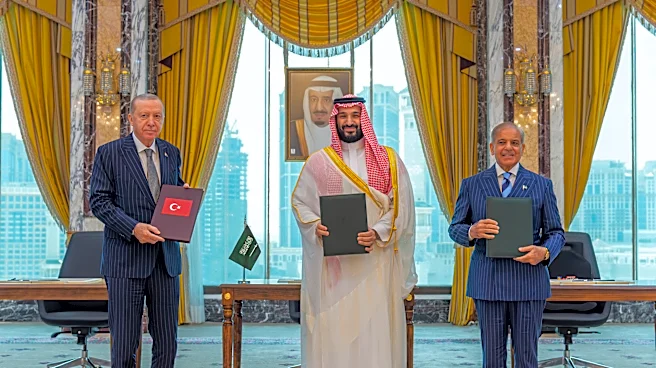
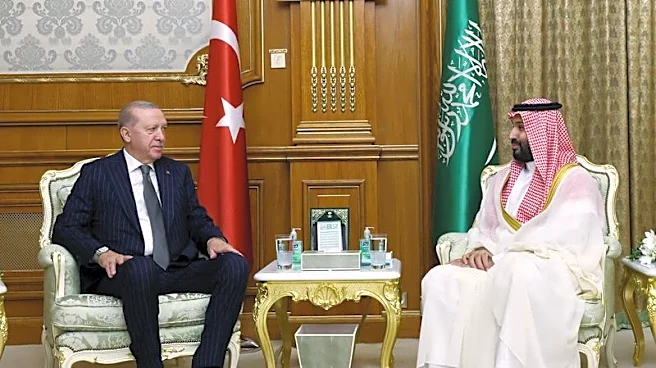
The defense pact between Pakistan, Saudi Arabia, and Turkiye, known as the Makkah Joint Defence Agreement, is open to other countries in the region willing to adhere to its principles. Deputy Prime Minister and Foreign Minister of Pakistan clarified that
the agreement is purely defensive and aims to strengthen collective deterrence. The pact, signed in Makkah, allows signatory states to treat an attack on one as an attack on all, similar to NATO's Article 5. The agreement does not replace existing bilateral or multilateral agreements and is consistent with the UN Charter's right to self-defense. Discussions are ongoing about potential expansion, with Egypt being a possible future member. The pact is seen as a strategic step towards regional peace and stability.
Why It's Important?
The Makkah Joint Defence Agreement represents a significant shift in regional security dynamics, emphasizing self-reliance among Middle Eastern countries. By fostering a collective defense mechanism, the pact reduces dependency on external powers like the United States, which has traditionally been a security guarantor in the region. This move could lead to a more balanced power structure in the Middle East, potentially reducing tensions and fostering cooperation. The inclusion of more countries could further stabilize the region, promoting peace and economic prosperity. However, it also raises questions about the future role of traditional alliances and the potential for new geopolitical alignments.
What's Next?
The pact's expansion is likely to be a focal point in regional diplomacy, with countries like Egypt considering joining. The founding members will need to establish a framework for integrating new members while maintaining the pact's core principles. This could involve setting up a political and military committee to oversee operations and ensure interoperability among different military systems. The success of the pact will depend on its ability to address regional security challenges without escalating tensions with non-member states. Observers will be watching how the pact influences regional stability and its impact on existing alliances.