



What's Happening?
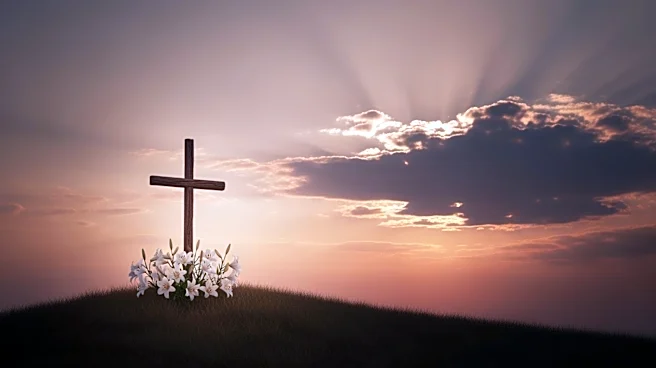
Good Friday, a significant day in the Christian calendar, commemorates the crucifixion and death of Jesus Christ. This year, it falls on April 3 for Catholics and Protestants, and April 10 for Orthodox Christians. The day is marked by solemn services
and ancient liturgical traditions, including the adoration of the cross. In Miami, elaborate processions featuring life-sized statues of Jesus and Mary are held, reflecting centuries-old rituals. These processions are part of a global tradition, with similar events occurring in places like Seville, Spain, and Antigua, Guatemala. Despite being a workday in the U.S., churches are often filled with worshippers participating in these unique services.
Why It's Important?
Good Friday is a pivotal moment in the Christian faith, symbolizing sacrifice and the anticipation of resurrection on Easter Sunday. The observance of this day through ancient rituals and public processions serves to reinforce religious traditions and community bonds. It also provides an opportunity for evangelism, as faith is taken from the confines of the church into public spaces. The global nature of these celebrations highlights the widespread influence of Christianity and its cultural significance across different regions.
What's Next?
As Good Friday leads into Easter Sunday, Christians worldwide will continue to engage in religious observances that culminate in the celebration of Jesus' resurrection. This period is a time for reflection and renewal of faith for many believers. Churches and religious communities will likely continue to organize events that emphasize the themes of sacrifice and redemption, drawing participants into deeper spiritual engagement.