







What's Happening?
The Texas Department of State Health Services (DSHS) has issued a health alert after confirming four cases of measles in an unvaccinated family in Montgomery County. The infection was traced back to an individual who traveled to Texas from another state.
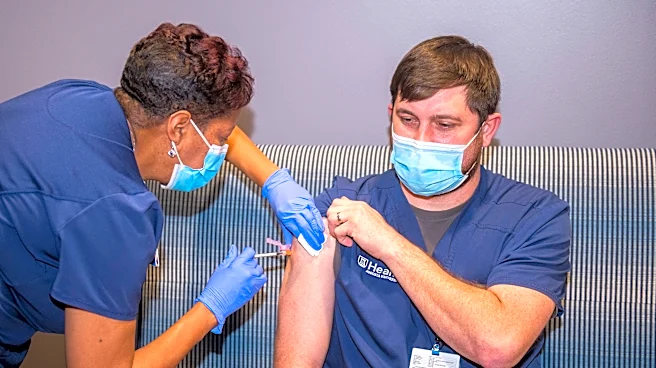
Measles, known for its high contagion rate, poses a significant risk, especially to unvaccinated individuals. Health officials are urging residents to ensure they are vaccinated with the measles, mumps, and rubella (MMR) vaccine, which is over 97% effective. The vaccine is accessible through healthcare providers, with free or low-cost options available for eligible families through the Texas Vaccines for Children program. Symptoms of measles typically appear 7 to 21 days after exposure and include high fever, cough, runny nose, and red, watery eyes, followed by a rash. Infected individuals are contagious from four days before to four days after the rash appears.
Why It's Important?
The resurgence of measles in Texas highlights the critical importance of vaccination in preventing outbreaks of highly contagious diseases. The situation underscores the vulnerability of unvaccinated populations and the potential for rapid disease spread. Public health officials emphasize the need for widespread vaccination to achieve herd immunity and protect those who cannot be vaccinated, such as infants and individuals with compromised immune systems. The outbreak serves as a reminder of the ongoing challenges in maintaining public health safety and the role of vaccination in preventing serious complications associated with measles, including pneumonia and brain inflammation.
What's Next?
Health officials recommend that individuals who suspect exposure to measles contact their healthcare provider before visiting medical facilities to prevent further spread. The DSHS will likely continue monitoring the situation closely and may implement additional measures to contain the outbreak. Public health campaigns may be intensified to raise awareness about the importance of vaccination and to encourage those who are unvaccinated to receive the MMR vaccine. The situation may prompt discussions on public health policies and vaccination requirements to prevent future outbreaks.