





What's Happening?
Several New England communities, including Rochester, New Hampshire, are actively restricting or banning data center development at the local level. This trend is driven by concerns over potential environmental impacts, resource consumption, and the preservation
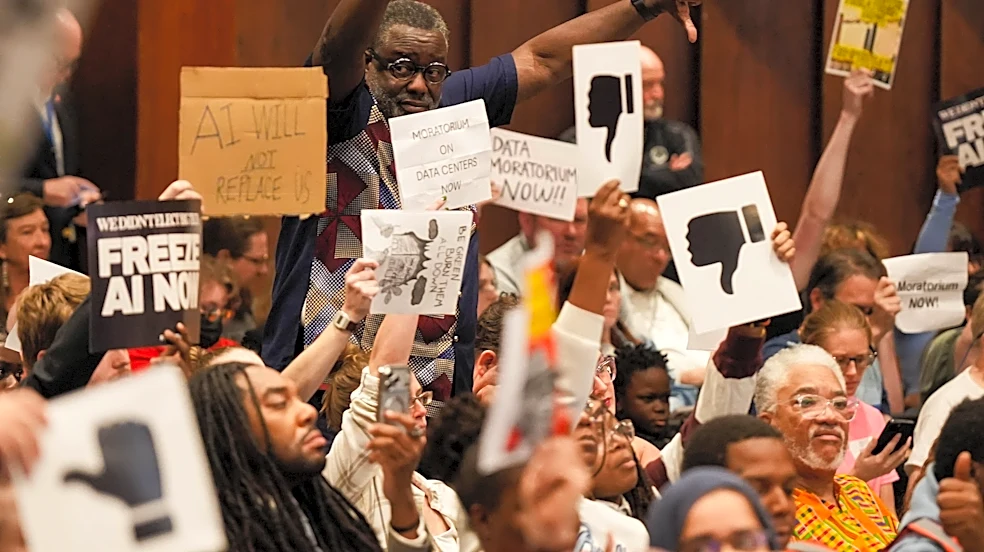
of local character. Nottingham, New Hampshire, for instance, implemented a one-year moratorium on data center construction after significant public backlash against a proposed facility. Canterbury, New Hampshire, voted to prohibit data centers during its town meeting in March, and Holyoke, Massachusetts, became the first town in that state to ban future data centers outright. Rochester, New Hampshire, is also considering heavily restricting data center construction within its limits. This local action is occurring despite a lack of state-level intervention from governors in the region.
Why It's Important?
This movement highlights the enduring tradition of local control in New England, where town meetings empower residents to directly influence local laws and development. The opposition to data centers stems from concerns about water degradation, ecological harm, noise pollution, and increased energy costs. Hyperscale data centers, which can consume as much power as 80,000 American households, pose significant infrastructure and environmental challenges. While governors have expressed concerns, the absence of state-level action means that local communities are taking the lead in regulating these facilities. This localized approach could create a patchwork of regulations across the region, potentially deterring data center developers from investing in New England, or forcing them to seek out areas with less stringent local oversight.
What's Next?
The one-year moratorium in Nottingham will allow the town to consider more permanent zoning changes to block future data center projects. Other towns like Rochester are expected to continue their efforts to implement similar restrictions. The debate in Bow, New Hampshire, regarding a potential data center at the former Merrimack station site, indicates that public engagement and local decision-making will remain central to this issue. The ongoing discussions will likely involve balancing economic development opportunities with environmental protection and community concerns. The outcome in these towns could set precedents for how other New England communities address the challenges posed by large-scale technological infrastructure.
Beyond the Headlines
The local resistance to data centers in New England underscores a broader societal tension between technological advancement and environmental sustainability. While data centers are crucial for the digital economy and artificial intelligence, their significant resource demands, particularly for energy and water, are prompting communities to re-evaluate their desirability. This situation also raises questions about the efficacy of local versus state-level governance in addressing issues with regional or national implications. The strong tradition of local control in New England, rooted in colonial history, provides a unique framework for these debates, potentially offering a model for other regions grappling with similar development pressures. The focus on community well-being over purely economic incentives reflects a growing awareness of the long-term environmental and social costs associated with rapid technological expansion.