
What's Happening?
India is pursuing a calculated multialignment foreign policy, engaging in security, economic, and technological partnerships with various global powers while resisting exclusive commitments to any single
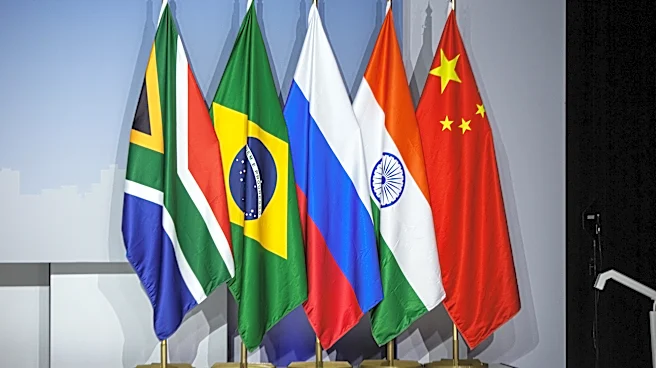
geopolitical bloc. This strategy is a response to a complex security environment, including China's military assertiveness, border confrontations, and expanding presence in the Indian Ocean. Consequently, India has deepened security cooperation with the U.S., Japan, and Australia, notably through the revival of the Quad and expanded defense technology collaboration. However, India has not abandoned its ties with Russia, BRICS, or the Shanghai Cooperation Organisation, maintaining Russia as a key defense and energy partner and continuing diplomatic engagement with Beijing despite mistrust. This approach is driven by a national interest in preserving freedom of action and preventing any single security challenge from dictating its entire foreign policy.
Why It's Important?
India's multialignment strategy is crucial for navigating its intricate security landscape, which includes challenges from China, Pakistan, instability in West Asia, vulnerabilities in the Indian Ocean, and competition over critical technologies. No single partnership can address all these diverse threats, making a flexible and diversified approach essential. For the U.S., India's strategy means a valuable security partner in the Indo-Pacific that is willing to cooperate on specific issues, particularly concerning China, but not to the extent of a formal alliance that would limit its autonomy. This approach challenges the traditional notion that countries must choose sides in an emerging contest between power blocs, demonstrating that middle powers can effectively manage multiple relationships. The success of this strategy depends on India's ability to enhance its economic and military capabilities to match its diplomatic ambitions, ensuring that its flexibility translates into material strength and strategic autonomy.
What's Next?
India's foreign policy will continue to involve a delicate balance of compromises and strategic decisions to sustain its multiple relationships. The focus will likely remain on converting diplomatic flexibility into tangible capabilities, such as stronger domestic defense production, diversified energy supplies, technological depth, and resilient supply chains. This will be critical for India to achieve true strategic autonomy and reduce its dependence on external suppliers for defense platforms, energy, and advanced technologies. The ongoing geopolitical shifts, where other middle powers are also diversifying partnerships, suggest that India's multialignment approach may become a model for countries seeking to avoid exclusive commitments. The ability of India to deepen its partnership with the U.S. without allowing it to dictate other foreign policy decisions will be a key indicator of the strategy's effectiveness in the coming years.
Beyond the Headlines
India's multialignment strategy reflects a broader evolution in international relations, moving beyond Cold War-era non-alignment to a more active engagement with various security, economic, and technological partnerships. This approach highlights the increasing complexity of the international order, where economic interdependence exists alongside geopolitical rivalry. The emphasis on strategic autonomy, rather than formal alliances, suggests a desire among rising powers to maintain their independence and tailor their foreign policy to their specific national interests. This could lead to a more fluid and less predictable global landscape, where traditional alliance structures are supplemented by issue-specific coalitions. The challenge for India, and other similar nations, lies in ensuring that this diplomatic flexibility is underpinned by robust economic and military capabilities, preventing strategic autonomy from becoming merely a slogan without the means to back it up. This trend could reshape how global security and economic cooperation are pursued in a multipolar world.