
What's Happening?
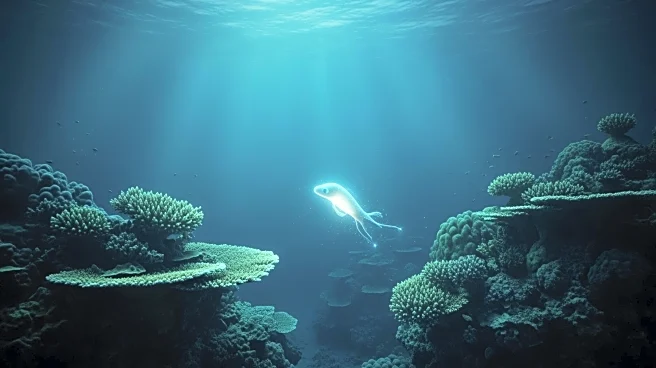
A team of scientific divers from the California Academy of Sciences has conducted a series of deep dives off the coast of Guam, exploring the ocean's upper twilight zone. This area, located more than 300
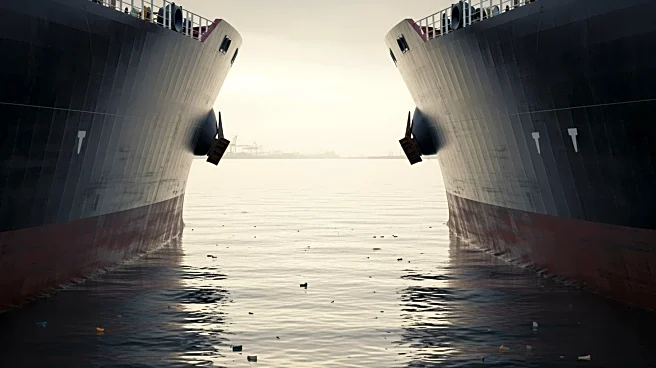
feet below the surface, is one of the least explored ecosystems due to its inaccessibility. The divers retrieved monitoring devices that have been collecting data on marine life and ocean temperatures for over eight years. During their expedition, they discovered a variety of unique marine creatures, including potentially new species of cardinalfish, crabs, and sea slugs. The findings also revealed significant human impact, with plastic pollution from the fishing industry prevalent even at these depths. The data collected suggests that climate change may be affecting these deep waters, challenging previous assumptions that they were insulated from warming trends.
Why It's Important?
The discoveries made in Guam's twilight zone underscore the vulnerability of deep-sea ecosystems to human activities and climate change. The presence of plastic pollution highlights the far-reaching impact of human waste, even in remote oceanic regions. The potential new species found emphasize the rich biodiversity that remains unexplored and at risk. Understanding these ecosystems is crucial for developing conservation strategies to protect them from overfishing, pollution, and climate change. The research also challenges the notion that deeper ocean zones are safe havens from environmental changes, suggesting that comprehensive global efforts are needed to mitigate these impacts.
What's Next?
The November expedition is part of a larger, two-year initiative to collect 76 monitoring devices from deep reefs across the Pacific, including locations in Palau, French Polynesia, and the Marshall Islands. This ongoing research aims to provide a more detailed understanding of life in the twilight zone and inform conservation efforts. As data continues to be analyzed, scientists hope to identify more new species and better understand the environmental pressures these ecosystems face. The findings could influence policy decisions regarding marine protection and climate change mitigation strategies.
Beyond the Headlines
The exploration of the twilight zone not only reveals new species but also raises ethical questions about human responsibility in preserving these fragile ecosystems. The presence of human-produced trash in such remote areas highlights the need for stricter regulations on waste management and fishing practices. Additionally, the potential impact of climate change on these deep-sea environments calls for urgent action to address global warming. The research may also inspire further scientific exploration and technological advancements in deep-sea diving and monitoring.