
What's Happening?
NASA's Artemis II mission, which aims to send astronauts to the Moon, will feature advanced windows manufactured by McDanel Advanced Materials. These windows are designed to provide astronauts with a direct
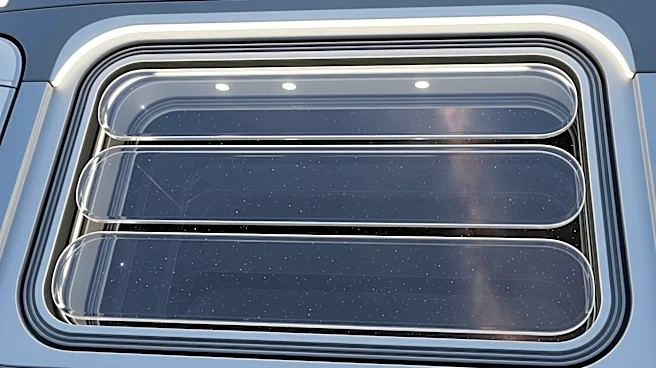
view of space, enhancing their experience. McDanel, which acquired Rayotek, the original manufacturer, is responsible for producing the windows for the first five Artemis missions. The windows are engineered to withstand the harsh conditions of space, including temperature extremes, radiation, and microgravity. They consist of multiple layers, with outer panes to protect against micrometeoroid impacts and inner panes to prevent bacterial and mold growth. The company is also exploring ways to reduce the weight of these windows for future missions, which is crucial for cost-effective and safe deep space travel.
Why It's Important?
The development of these advanced windows is significant for the Artemis II mission and future space exploration. By providing astronauts with a direct view of space, the windows enhance the human experience of space travel, which is a key aspect of astronaut training and motivation. Additionally, the engineering advancements in window design contribute to the overall safety and efficiency of space missions. Reducing the weight of spacecraft components is critical for long-term missions, such as those to Mars, as it can lower costs and improve safety. This innovation reflects the ongoing efforts to make space travel more sustainable and accessible.
What's Next?
As NASA continues to prepare for the Artemis III mission and beyond, engineers at McDanel are focused on further reducing the weight of the windows while maintaining their safety and durability. This effort is part of a broader initiative to make deep space travel more feasible and cost-effective. The success of these innovations could influence the design of future spacecraft and play a role in the planning of missions to Mars and other distant destinations.