






What's Happening?
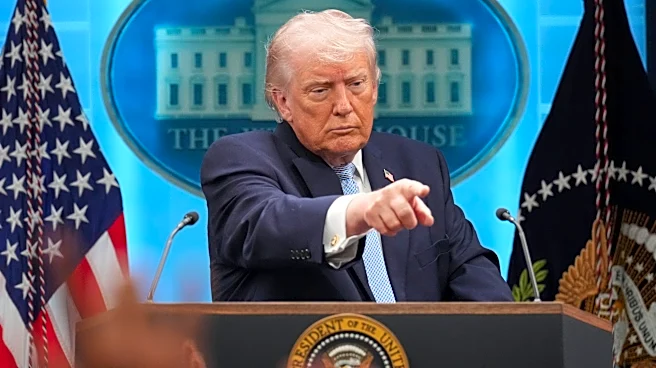
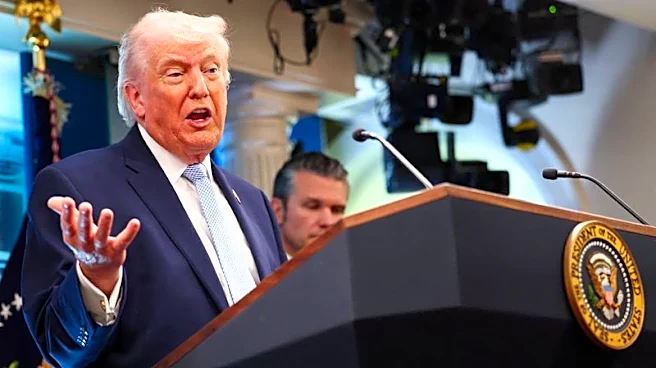
President Trump announced that the United States and Iran have reached a last-minute ceasefire agreement to halt hostilities temporarily. This agreement includes a commitment from the U.S. to cease attacks for at least two weeks, contingent upon Iran's
agreement to reopen the Strait of Hormuz. The ceasefire comes amid heightened tensions and military confrontations in the region, which have threatened to escalate into broader conflict. The reopening of the Strait of Hormuz is a critical component of the agreement, as it is a vital passage for global oil shipments.
Why It's Important?
The ceasefire agreement is significant as it temporarily alleviates the risk of further military escalation between the U.S. and Iran, which could have severe implications for regional stability and global oil markets. The reopening of the Strait of Hormuz is crucial for maintaining the flow of oil, which impacts global energy prices and economic stability. The agreement also provides a window for diplomatic efforts to address underlying issues and prevent future conflicts. However, the temporary nature of the ceasefire underscores the fragility of the situation and the need for sustained diplomatic engagement.
What's Next?
In the coming weeks, diplomatic efforts are likely to intensify to solidify the ceasefire and address the broader issues contributing to the conflict. The international community may play a role in facilitating dialogue and ensuring compliance with the agreement. Monitoring the situation will be crucial to prevent any violations that could reignite hostilities. Additionally, discussions on long-term solutions to ensure the security of the Strait of Hormuz and regional stability are expected to continue. The outcome of these efforts will have significant implications for U.S. foreign policy and international relations.