



What's Happening?
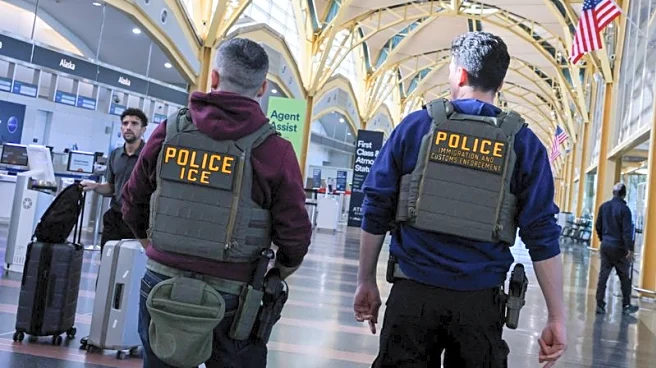
White House border czar Tom Homan indicated that Immigration and Customs Enforcement (ICE) agents might continue their presence at airports even after Transportation Security Administration (TSA) officers receive their paychecks. This development comes
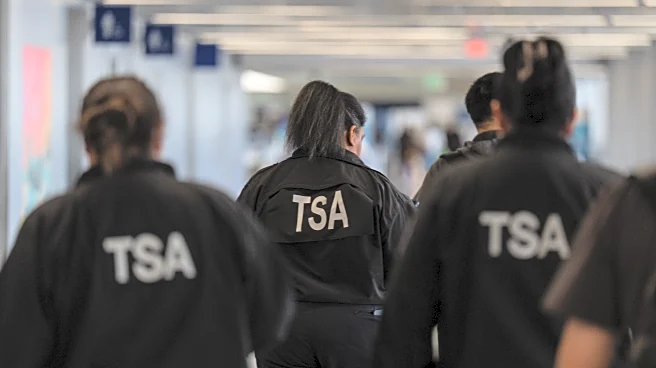
as the partial government shutdown persists, affecting the Department of Homeland Security (DHS). Homan's comments on CNN's 'State of the Union' suggest that the decision will depend on whether TSA agents return to work. President Trump's recent order to use preexisting funds for TSA paychecks aims to alleviate the situation, but the broader DHS shutdown remains unresolved. The shutdown has led to significant TSA staffing shortages, causing long wait times at airports nationwide.
Why It's Important?
The continued presence of ICE agents at airports highlights the ongoing security concerns and operational challenges during the government shutdown. The situation underscores the critical role of TSA officers in maintaining airport security and the impact of their absence on travel efficiency. The shutdown has strained DHS operations, with political disagreements over ICE funding and reforms contributing to the impasse. The resolution of TSA paychecks may temporarily ease airport congestion, but the underlying issues of DHS funding and ICE operations remain contentious. This situation reflects broader debates over immigration policy and government funding priorities, affecting both national security and public convenience.
What's Next?
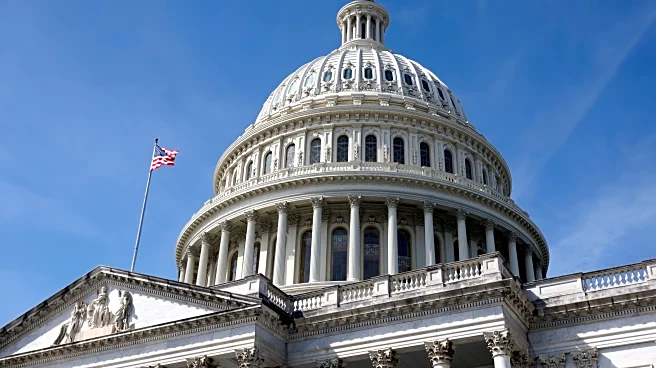
As the government shutdown continues, negotiations between Congress and the White House are crucial to resolving the funding impasse. The potential for ICE agents to remain at airports raises questions about the long-term implications for airport security and immigration enforcement. Stakeholders, including lawmakers and civil rights groups, may push for reforms and accountability in ICE operations. The resolution of TSA paychecks is a temporary measure, and the broader DHS funding issues require a comprehensive legislative solution. The ongoing political stalemate may lead to further disruptions and necessitate continued public and political engagement to address the underlying challenges.