



What's Happening?
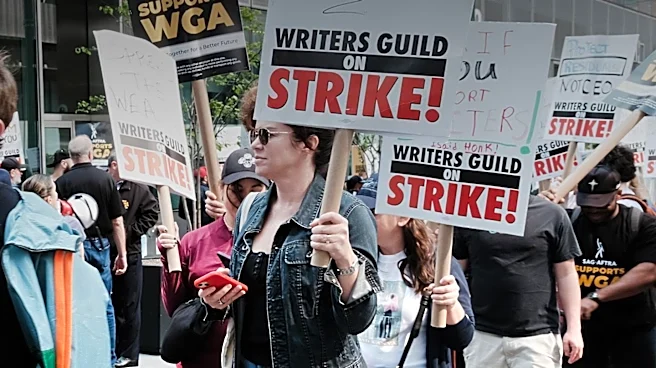
The Authors Guild has joined a global protest against proposed changes to Australian copyright law that would permit AI companies to use authors' work without a license to train their models. This legislation, if enacted, would apply to authors worldwide
and would allow AI companies to exploit any author's work if the training operations are conducted on Australian soil. The Guild argues that this would effectively preempt lawsuits authors have filed against AI companies and could encourage these companies to relocate their training activities to Australia while continuing to deploy their AI models in the U.S. Although the Australian government plans to include an opt-out mechanism for copyright owners, the Authors Guild contends that such opt-outs are difficult to implement and are not a substitute for the 'opt-in licensing' that allows creators to control the usage of their work.
Why It's Important?
This development holds significant implications for U.S. authors and the broader creative industries. If Australia's proposed law passes, it could create a legal loophole that undermines copyright protections globally, including in the U.S. U.S. authors, whose works could be used without permission by AI companies operating in Australia, would face challenges in protecting their intellectual property and securing fair compensation. This could set a dangerous precedent, potentially encouraging other countries to adopt similar legislation, further eroding creators' rights. The economic impact on authors, publishers, and related industries could be substantial, as the unauthorized use of copyrighted material by AI could diminish the value of creative works and reduce licensing opportunities. It also highlights the ongoing tension between technological advancement and intellectual property rights in the digital age.
What's Next?
The Authors Guild is actively urging creators to sign a public statement condemning the proposed Australian legislation. This collective action aims to pressure the Australian government to reconsider its plans and uphold international copyright standards. The statement emphasizes that creators' work should only be used to train AI models with explicit permission. The outcome of this protest and the Australian government's decision will likely influence future legislative efforts regarding AI and copyright in other nations, including the U.S. The debate will continue to involve legal challenges, lobbying efforts by creator organizations, and discussions among policymakers about how to balance innovation in AI with the protection of intellectual property rights. The global nature of this issue means that decisions made in one country can have ripple effects across international creative markets.
Beyond the Headlines
The controversy surrounding Australia's proposed copyright law delves into fundamental questions about ownership, fair use, and the future of creative work in an AI-driven world. It raises ethical concerns about whether AI models should be allowed to profit from the intellectual labor of creators without consent or compensation. The 'opt-out' versus 'opt-in' debate is central, highlighting the difference between a system that places the burden on creators to protect their work and one that inherently respects their rights. This situation also underscores the need for international cooperation and harmonized legal frameworks to address the challenges posed by AI. The long-term implications could reshape how creative content is produced, distributed, and valued, potentially leading to new business models for creators or, conversely, a significant devaluation of their work if robust copyright protections are not maintained.