

What's Happening?
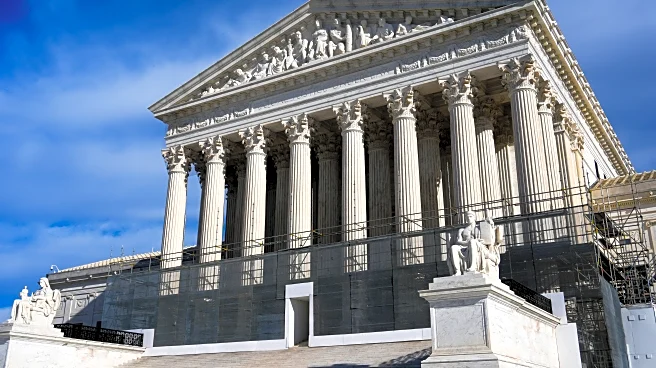
The Supreme Court of the United States (SCOTUS) has ruled against President Trump's tariffs, which were imposed as part of his economic and foreign policy measures. The 6-3 decision by the conservative-majority court highlights a significant challenge
to presidential authority, led by Neal Katyal, an Indian-origin American lawyer. Katyal, representing small businesses affected by the tariffs, argued that tariffs are a form of taxation and only Congress has the power to impose such taxes. This ruling underscores the constitutional principle of separation of powers, emphasizing that the President overstepped his authority. Katyal, a prominent constitutional lawyer, has a history of challenging executive actions, including Trump's 2017 travel ban.
Why It's Important?
This ruling is a pivotal moment in U.S. constitutional law, reinforcing the limits of presidential power and the role of Congress in taxation. It serves as a reminder of the checks and balances inherent in the U.S. political system. The decision could have significant implications for U.S. trade policy and international relations, as it restricts the President's ability to unilaterally impose tariffs. This may lead to increased scrutiny of executive actions and could influence future administrations' approaches to economic policy. Businesses affected by the tariffs may see relief, while the ruling could also impact global trade dynamics.
What's Next?
Following the ruling, President Trump announced a new 10% global tariff, later increased to 15%, under Section 122 of the Trade Act of 1974. This move is likely to face further legal challenges, as it is unprecedented for a U.S. President to invoke this statute. The tariffs are limited to 150 days unless extended by Congress, which may lead to legislative debates and potential court battles. Neal Katyal has already expressed skepticism about the legality of this new tariff strategy, suggesting that the President should seek Congressional approval for such measures.