




What's Happening?
NASA's Nancy Grace Roman Space Telescope has reached a significant prelaunch milestone by being positioned vertically at the Kennedy Space Center in Florida. This development marks a crucial step in the telescope's preparation for its upcoming launch,
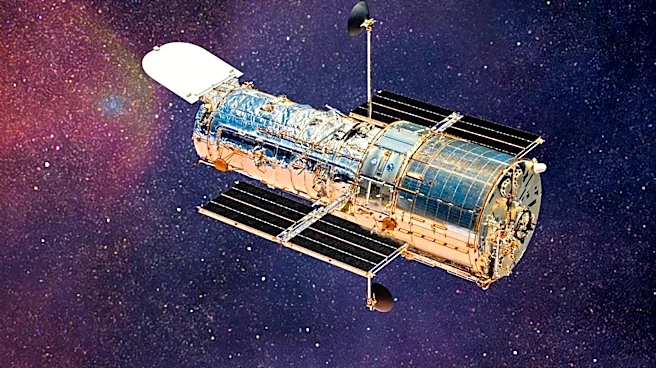
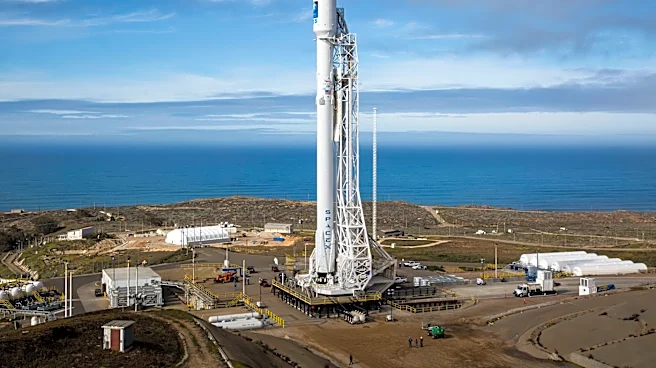
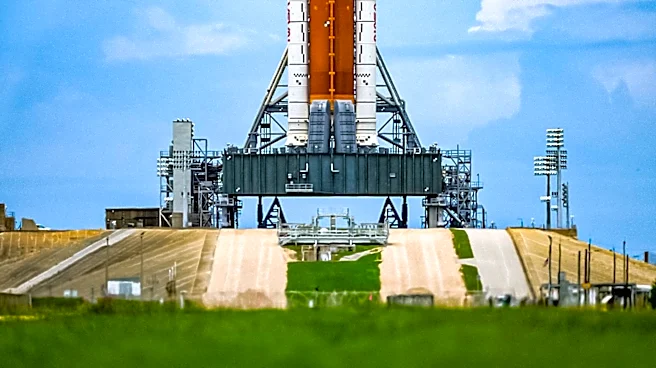
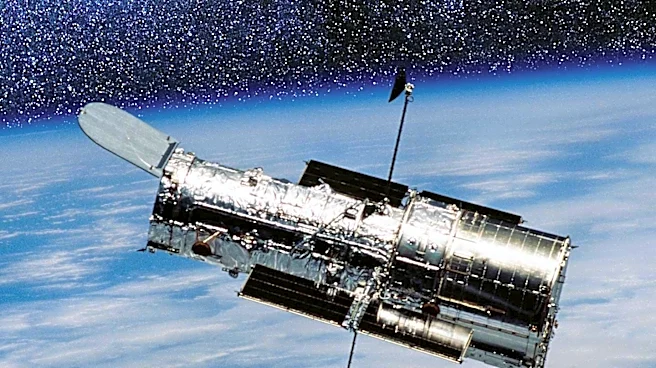
which is scheduled to occur nine months ahead of the original timeline. The telescope was transferred from NASA's Goddard Space Flight Center in Maryland to the Kennedy Space Center, where it underwent inspection and cleaning to ensure it is free from contaminants. The Roman Space Telescope, named after NASA's first chief astronomer, is designed to provide a field of view 100 times larger than that of the Hubble Space Telescope, enabling extensive cosmic exploration. The launch is planned to take place no earlier than August 30, using a SpaceX Falcon Heavy rocket from Launch Complex 39A.
Why It's Important?
The advancement of the Nancy Grace Roman Space Telescope's launch preparations is a significant milestone for NASA's astronomical research capabilities. The telescope's ability to offer a vastly larger field of view compared to the Hubble Space Telescope will allow scientists to conduct more comprehensive surveys of the universe, potentially leading to groundbreaking discoveries in cosmology and astrophysics. The early completion of prelaunch milestones demonstrates NASA's efficiency and commitment to advancing space exploration. The successful deployment of the Roman Space Telescope could enhance the United States' leadership in space science and technology, providing valuable data that could influence future space missions and scientific research.
What's Next?
Following the vertical positioning of the Roman Space Telescope, NASA will proceed with further inspections, functional testing, and integration work to ensure the telescope is ready for its scheduled launch. The upcoming launch on a SpaceX Falcon Heavy rocket will be a critical event, as it will mark the beginning of the telescope's mission to explore the cosmos. The scientific community and space enthusiasts will be closely monitoring the launch and subsequent operations of the telescope, anticipating the wealth of data it is expected to provide. The success of this mission could pave the way for future collaborations and advancements in space exploration technology.