
What's Happening?
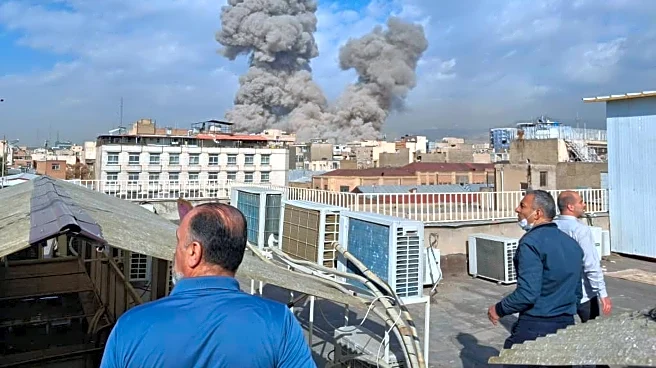
UN Secretary-General Antonio Guterres expressed deep regret over the failure of peace talks concerning the Iran conflict during an emergency meeting of the UN Security Council. The meeting was convened following US and Israeli strikes on Iran, which have
escalated tensions in the region. Guterres highlighted the missed opportunity for diplomacy, emphasizing the importance of dialogue in resolving international conflicts. Additionally, the International Atomic Energy Agency (IAEA) announced an emergency meeting to discuss the strikes, which was requested by Russia. The meeting will precede a previously scheduled quarterly session focused on Iran's nuclear program. Iran's Ambassador to the UN, Amir-Saeid Iravani, defended the country's actions as self-defense against aggression, declaring that all hostile bases and assets are legitimate military targets.
Why It's Important?
The failure of peace talks and subsequent military actions have significant implications for regional stability and international relations. The escalation could lead to further conflict, impacting global security and diplomatic efforts. The involvement of major powers like the US, Israel, and Russia underscores the complexity of the situation, with potential repercussions for international alliances and geopolitical dynamics. The IAEA's emergency meeting highlights concerns over nuclear safety and the potential for nuclear proliferation, which could have far-reaching consequences for global peace and security. The situation also poses challenges for diplomatic efforts aimed at de-escalating tensions and promoting peaceful resolutions.
What's Next?
The upcoming IAEA meeting will be crucial in addressing the nuclear implications of the strikes and assessing the situation's impact on Iran's nuclear program. Diplomatic efforts may intensify as international stakeholders seek to prevent further escalation and promote dialogue. The UN and other international bodies may increase pressure on involved parties to return to negotiations and explore peaceful solutions. The global community will be closely monitoring developments, with potential responses from political leaders and civil society groups advocating for peace and stability.
Beyond the Headlines
The situation raises ethical and legal questions regarding the use of military force and the principles of self-defense in international law. The conflict also highlights the challenges of balancing national security interests with global peace efforts. Long-term implications may include shifts in international alliances and the reevaluation of diplomatic strategies in conflict resolution. The role of international organizations like the UN and IAEA in mediating and monitoring such conflicts will be critical in shaping future approaches to global security.