





What's Happening?
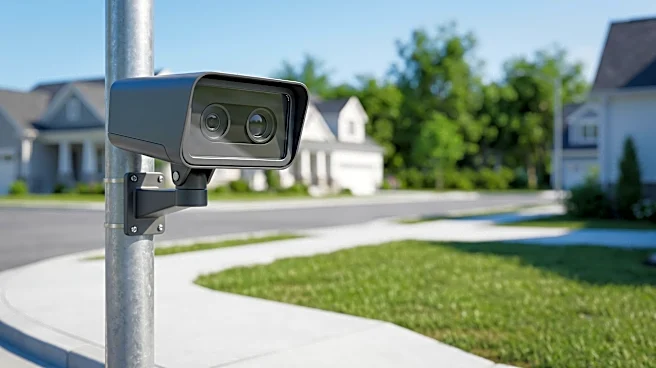
The village of Homer Glen has suspended its Flock camera license plate reader program. This decision follows reports that a Will County sheriff’s deputy was placed on administrative leave due to alleged policy violations related to the camera system.
The suspension was announced shortly after a contentious meeting where the Will County Board approved the renewal of Flock camera agreements. These agreements permit municipalities, including Mokena, Frankfort, and Manhattan, to utilize county rights of way for their license plate reader cameras. The move by Homer Glen indicates a direct response to concerns regarding the appropriate use and oversight of this surveillance technology within the community. The specific nature of the alleged policy violations by the sheriff's deputy has not been detailed, but it has prompted immediate action from the village.
Why It's Important?
The suspension of Homer Glen's Flock camera program highlights growing concerns across the U.S. regarding privacy, surveillance technology, and accountability in law enforcement. License plate readers, while touted as tools for crime prevention and investigation, raise questions about data collection, storage, and potential misuse. This incident could prompt other municipalities using similar technologies to review their policies and oversight mechanisms, potentially leading to stricter regulations or temporary suspensions. For residents, it underscores the ongoing tension between public safety measures and individual privacy rights. The involvement of a sheriff's deputy in alleged policy violations also brings to light the critical need for clear guidelines and training for personnel operating such systems, as well as robust internal review processes to maintain public trust. The outcome of this situation in Homer Glen could influence broader discussions on the deployment and governance of surveillance technologies in communities nationwide.
What's Next?
Following the suspension, Homer Glen is expected to conduct a thorough review of its Flock camera program and the alleged policy violations. This review will likely involve assessing the existing operational protocols, data access, and usage policies for the license plate reader system. The Will County Sheriff's Office will also continue its investigation into the deputy placed on administrative leave, which could result in disciplinary actions or further policy adjustments. Other municipalities in Will County and beyond, particularly those with similar Flock camera agreements, may face increased scrutiny from their residents and local advocacy groups. This could lead to demands for greater transparency, public forums, or even similar suspensions as communities re-evaluate the balance between security and civil liberties. The long-term future of the Flock camera program in Homer Glen will depend on the findings of these investigations and any subsequent policy reforms.
Beyond the Headlines
This incident in Homer Glen touches upon the broader societal debate surrounding the proliferation of surveillance technologies in public spaces. While license plate readers are often justified under the premise of enhancing public safety and aiding law enforcement, their widespread deployment raises significant ethical and legal questions. The potential for mission creep, where data collected for one purpose is used for another, and the risk of disproportionate impact on certain communities are key concerns. This situation could serve as a catalyst for a more comprehensive discussion on data governance, privacy rights in the digital age, and the role of technology in policing. It also highlights the importance of local government oversight in ensuring that powerful tools are used responsibly and ethically, preventing potential abuses that could erode public trust and civil liberties. The outcome in Homer Glen could set a precedent for how other communities approach the integration of advanced surveillance systems.