





What's Happening?
Charleston County is moving forward with a $5.5 million improvement project aimed at enhancing traffic flow and safety at two key intersections on Savannah Highway in West Ashley. The intersections targeted for upgrades are Wappoo Road and Savannah Highway,
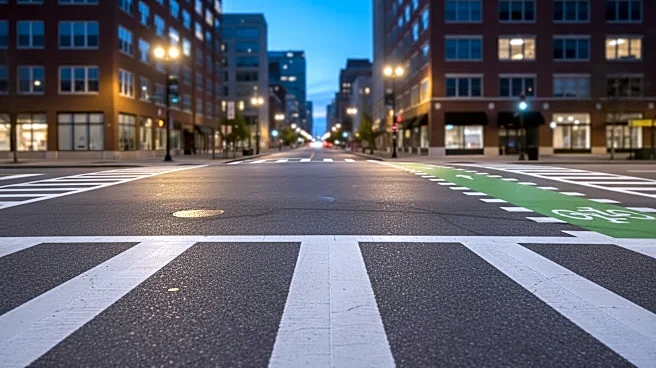
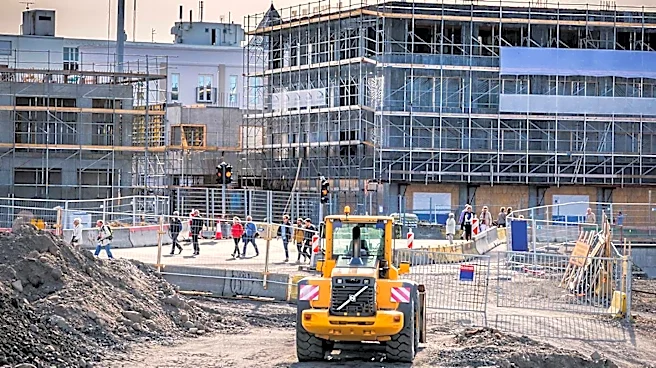
and Dupont Road and Stinson Drive. County staff are recommending that the Charleston County Council award a construction contract for the project. The county finance committee is slated to review the contract before it proceeds to the County Council for final approval next week. If approved, construction is anticipated to conclude by the end of 2027. The plans for Wappoo Road include adding a new right-turn lane, marked crosswalks, and a new crossing to connect the West Ashley Greenway to the West Ashley Bikeway. At Dupont Road and Stinson Drive, the project involves adding a left-turn lane, realigning the two roads, constructing a new sidewalk, and incorporating marked crosswalks. This initiative has been in development since 2022, following concerns raised by residents and stakeholders regarding safety and congestion.
Why It's Important?
This infrastructure project is important for Charleston County as it directly addresses long-standing issues of traffic congestion and safety on a major thoroughfare, Savannah Highway (U.S. 17). Improved traffic flow will likely reduce commute times for residents and facilitate commercial activities, benefiting local businesses that rely on efficient transportation. The addition of new turn lanes and the reprogramming of traffic signals are expected to decrease signal cycle times, allowing more vehicles to pass through the intersections more quickly. Furthermore, the project emphasizes pedestrian and cyclist safety through dedicated raised crosswalks, asphalt brick stamp crosswalks for increased visibility, and pedestrian crossing signal heads with countdowns. This focus on multi-modal safety is crucial for urban development, promoting alternative transportation methods, and enhancing the quality of life for all road users. The funding for this project comes from the county’s 2016 transportation sales tax, demonstrating a commitment to utilizing dedicated revenue streams for critical infrastructure improvements.
What's Next?
The immediate next step for the Savannah Highway improvement project is the consideration of the construction contract by the county finance committee on Thursday. Following this, the contract will be presented to the Charleston County Council next week for final approval. If the County Council grants approval, construction is expected to commence later this year, likely in late October or early November. County officials have indicated that there will be some nighttime lane closures during the construction phase, but they aim to minimize daytime closures to avoid disrupting peak-hour traffic. The project is projected to be completed by the end of 2027. Additionally, county officials are exploring other options to alleviate congestion along Savannah Highway, including another intersection project further down the highway at Avondale. The success of this current project could influence future infrastructure planning and investment in the region.
Beyond the Headlines
The Charleston County project on Savannah Highway highlights a broader challenge faced by many growing U.S. urban and suburban areas: balancing increased traffic demands with community needs and environmental considerations. The initial pushback against raised medians due to concerns about their impact on businesses along the corridor illustrates the complex interplay between infrastructure development and local economic interests. This project's approach, focusing on turn lanes and signal timing adjustments, represents a compromise that aims to improve traffic flow without significantly altering the commercial landscape. The integration of pedestrian and cyclist infrastructure also reflects a growing trend in urban planning towards more inclusive and sustainable transportation systems. This shift acknowledges the diverse needs of a community, moving beyond a car-centric model to one that supports walking and cycling, which can have positive long-term effects on public health and local environmental quality. The project serves as a case study in how local governments navigate competing priorities to achieve community-wide benefits.