What's Happening?
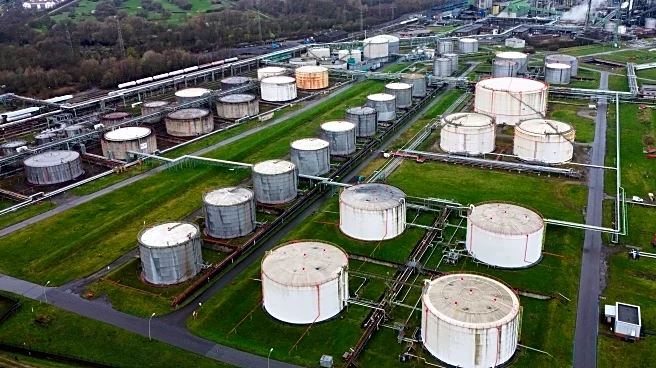
Germany and Austria have announced plans to release portions of their oil reserves following a request from the International Energy Agency (IEA) to mitigate the impact of energy price spikes caused by the ongoing conflict with Iran. The IEA has called
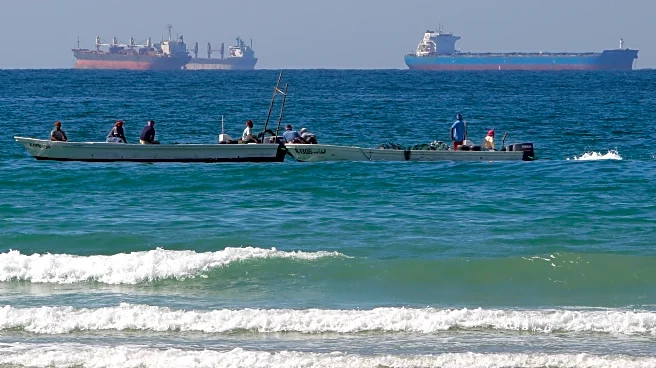
for the release of 400 million barrels of oil from its member countries' emergency reserves, marking the largest release in its history. This decision comes as Iran has effectively halted cargo traffic through the Strait of Hormuz, a critical passage for global oil shipments, in response to U.S. and Israeli military actions. The disruption has led to a significant reduction in global energy supply, with export volumes of crude and refined products dropping to less than 10% of pre-conflict levels.
Why It's Important?
The release of oil reserves is a strategic move to stabilize global energy markets and prevent further economic disruption. The Strait of Hormuz is a vital chokepoint for oil transportation, and its closure has exacerbated global energy concerns. By releasing emergency reserves, the IEA aims to alleviate immediate market disruptions and curb soaring energy prices. This action is crucial for maintaining economic stability, particularly for countries heavily reliant on oil imports. However, the effectiveness of this measure is contingent on the resolution of the underlying geopolitical tensions, as prolonged conflict could deplete reserves and lead to sustained economic challenges.
What's Next?
The release of oil reserves is expected to have a short-term stabilizing effect on energy markets, but the situation remains precarious. The IEA and its member countries will need to monitor the conflict closely and be prepared for further interventions if necessary. The ongoing military actions in the region and the blockade of the Strait of Hormuz could prompt additional international diplomatic efforts to de-escalate tensions. Meanwhile, countries like Germany and Austria are implementing measures to control domestic fuel prices, reflecting a broader strategy to mitigate the economic impact on consumers and businesses.