




What's Happening?
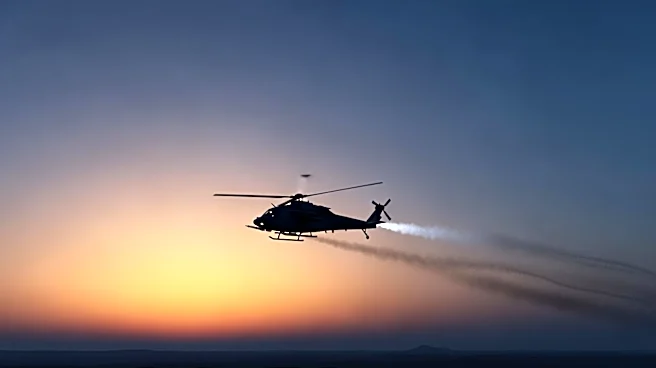
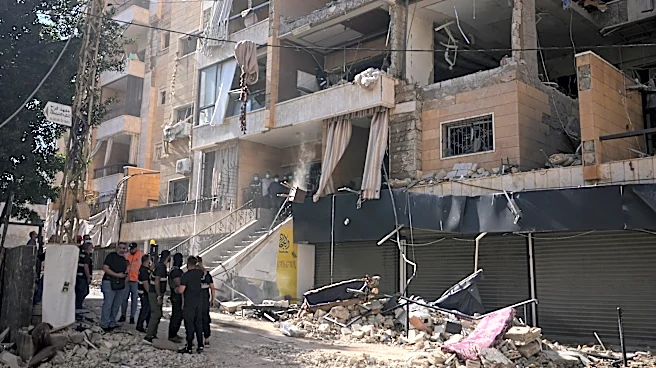
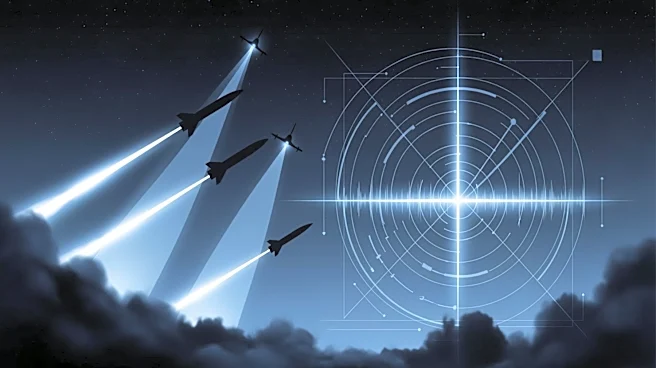
The United States military has conducted airstrikes on Iranian air defense and radar systems around the Strait of Hormuz. This action follows the crash of a U.S. Army helicopter off the coast of Oman, which the U.S. attributes to Iranian actions. The U.S. Central
Command confirmed that precision munitions were used to target Iranian air defense, ground control stations, and surveillance radar sites. The strikes involved U.S. Air Force and Navy fighter jets. Iran has acknowledged the strikes but has not provided details on the extent of the damage.
Why It's Important?
The incident underscores the ongoing tensions between the U.S. and Iran, particularly in the strategically critical Strait of Hormuz, a vital passage for global oil shipments. The U.S. response highlights its commitment to protecting its military assets and maintaining freedom of navigation in the region. This development could escalate military engagements in the area, affecting global oil markets and regional stability. The situation also poses a challenge for U.S. foreign policy, as it navigates its relations with Iran and its allies in the Middle East.
What's Next?
Further military engagements could occur if tensions continue to rise. The U.S. may increase its military presence in the region to deter further Iranian actions. Diplomatic efforts might be initiated to de-escalate the situation, involving regional and international stakeholders. The incident could also influence U.S. domestic politics, as policymakers debate the appropriate response to Iranian provocations.