







What's Happening?
The Alaska Railroad is wrapping up its summer passenger service in mid-September, transitioning to a weekly schedule for the winter months. Meghan Clemens, External Affairs Director for the Alaska Railroad, stated that while this summer was not record-breaking
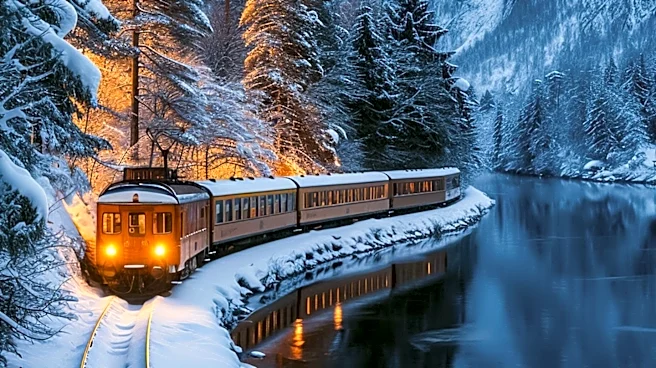
for ridership, it continued the strong comeback seen in recent years after a dip during the COVID-19 pandemic. The summer schedule featured three daily trains departing from the Anchorage Depot, including the popular Coastal Classic route to Seward. This route offers scenic views along Turnagain Arm and glimpses of glaciers, with the train tracks diverging from the highway in certain sections to provide unique perspectives. The last day for the Alaska Railroad's summer schedule is September 13, after which daily passenger trips will cease until May of the following year. During the winter, trains will continue to run north on a weekly basis.
Why It's Important?
The conclusion of the Alaska Railroad's summer schedule marks a significant seasonal shift for tourism and transportation in Alaska. The Coastal Classic route is a vital component of the state's tourism industry, attracting visitors with its unique scenic journey through some of Alaska's most breathtaking landscapes. The strong performance in ridership, despite not being record-breaking, indicates a healthy recovery for the travel sector in Alaska post-pandemic. The transition to a weekly winter schedule reflects the seasonal nature of tourism in the region, with reduced demand for daily passenger services outside the peak summer months. This change impacts local businesses that rely on tourist traffic, as well as residents who use the railroad for travel. The continued operation of weekly northern routes during winter ensures essential connectivity for communities along the railbelt.
What's Next?
With the summer schedule ending on September 13, daily passenger services on the Alaska Railroad will cease until May. The railroad will then operate on a weekly schedule for northbound routes throughout the winter. Travelers planning to experience the scenic routes, particularly the Coastal Classic to Seward, will need to plan their trips within the summer operating window in future years. The Alaska Railroad will likely begin preparations for the next summer season, including maintenance, scheduling, and marketing efforts to attract tourists. The performance of the summer season will inform future operational decisions and investment in services. Local businesses and tourism operators will adjust their operations in anticipation of the reduced tourist influx during the winter months.
Beyond the Headlines
The seasonal nature of the Alaska Railroad's operations underscores the broader economic and logistical challenges and opportunities within Alaska's tourism sector. The reliance on summer tourism means that businesses and infrastructure must adapt to significant fluctuations in demand. The railroad's role extends beyond tourism, serving as a critical transportation link for goods and residents in a state with vast, often remote, territories. The 'strong comeback' in ridership post-COVID highlights the resilience of the travel industry and the enduring appeal of Alaska's natural beauty. Furthermore, the unique design of the Coastal Classic route, which offers views inaccessible by road, emphasizes the importance of specialized infrastructure in showcasing the state's wilderness. The winter schedule, while reduced, maintains essential services, reflecting the railroad's dual function as both a tourist attraction and a vital utility.