





What's Happening?
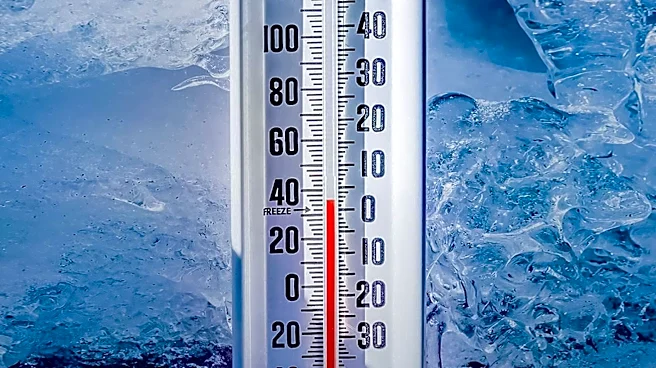
On July 21, 1983, Vostok Station in Antarctica recorded the coldest air temperature ever directly measured on Earth at -128.6°F (-89.2°C). This record, set during the Antarctic winter, remains unbroken. Vostok Station, a Russian research outpost, is located
about 800 miles from the South Pole. The extreme cold conditions are attributed to high elevation, months without sunlight, dry air, and clear skies. These factors contribute to Antarctica being the coldest place on Earth, with temperatures that can cause bare skin to freeze in seconds and metal to become brittle.
Why It's Important?
The record highlights the extreme weather conditions that can occur on Earth, providing valuable data for climate research. Understanding these conditions is crucial for scientists studying climate history, atmospheric science, and glaciology. The data from Vostok Station contributes to our knowledge of Earth's climate system and helps in predicting future climate patterns. The record also underscores the challenges faced by researchers working in such harsh environments, emphasizing the importance of international scientific collaboration in polar research.
Beyond the Headlines
The extreme conditions at Vostok Station offer insights into the potential impacts of climate change on polar regions. As global temperatures rise, understanding the dynamics of cold environments becomes increasingly important. The research conducted at Vostok Station, including the study of ancient ice cores, provides critical information about past climate changes and helps scientists predict future trends. The station's work also highlights the resilience and adaptability required for scientific exploration in extreme environments.