




What's Happening?
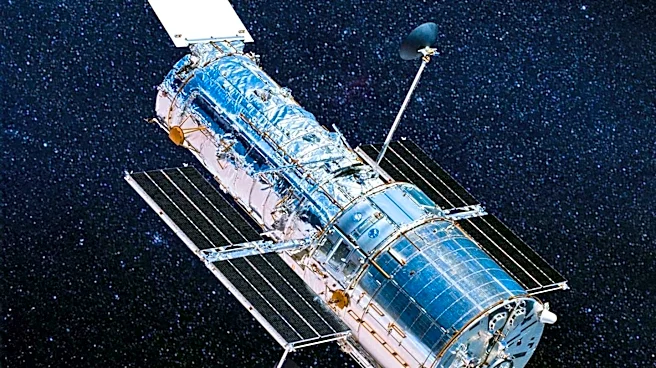
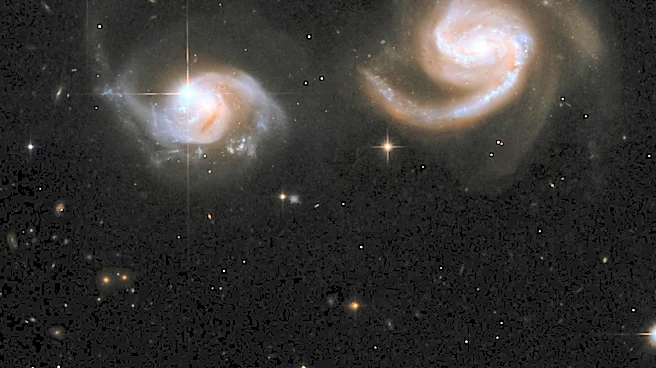
The Hubble Space Telescope, launched in 1990, has been instrumental in advancing our understanding of the universe. It has contributed to significant discoveries, such as measuring the universe's expansion and identifying dark energy. Hubble's observations
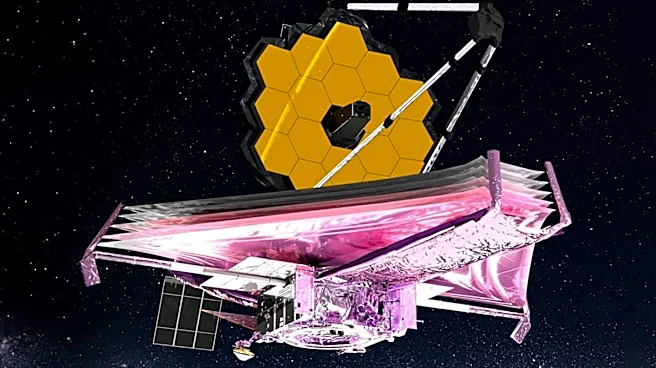
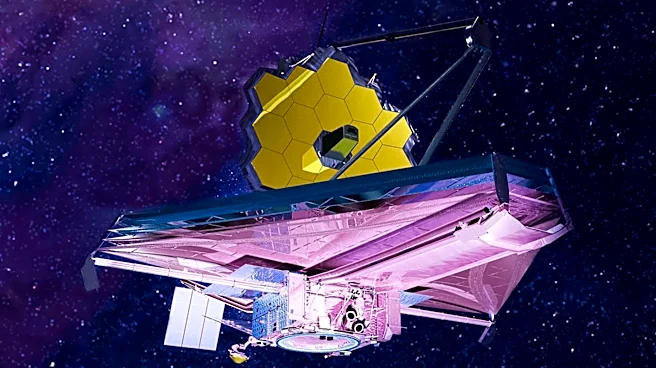
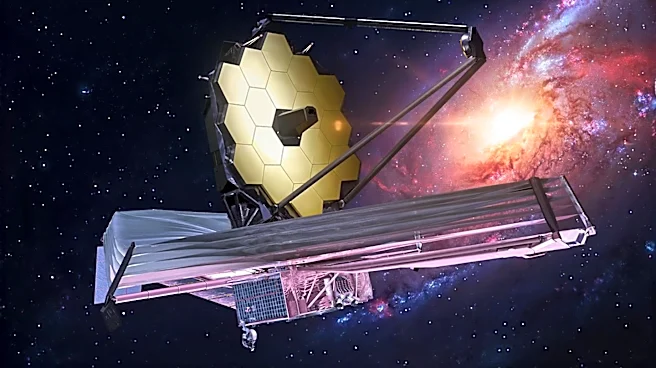
of exploding stars have helped astronomers determine distances to faraway galaxies, which in turn allowed them to calculate the rate of the universe's expansion. This groundbreaking work led to a Nobel Prize in Physics for two teams of scientists. Hubble's data has been cited in tens of thousands of research papers, and its images have inspired both scientists and the public. The telescope's findings have complemented observations from other telescopes like the James Webb Space Telescope and the Nancy Grace Roman Space Telescope, enhancing our understanding of celestial phenomena.
Why It's Important?
Hubble's contributions have been pivotal in shaping modern astrophysics and cosmology. By providing precise measurements of the universe's expansion, Hubble has helped confirm the existence of dark energy, a mysterious force driving the accelerated expansion of the universe. This has profound implications for our understanding of the universe's fate and the fundamental laws of physics. The telescope's ability to observe distant galaxies and cosmic phenomena has expanded our knowledge of the universe's structure and evolution. Hubble's legacy continues to influence ongoing and future space missions, as its data serves as a foundation for further exploration and discovery.