







What's Happening?
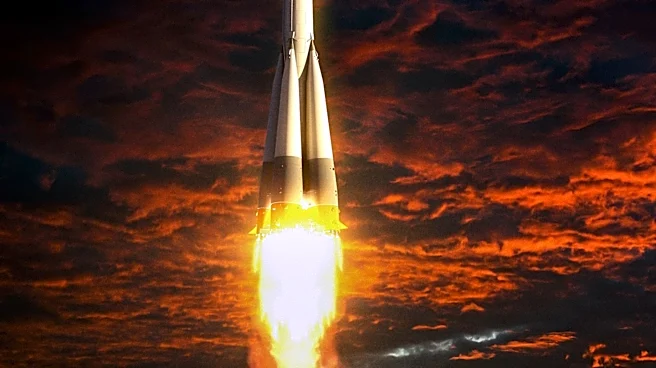
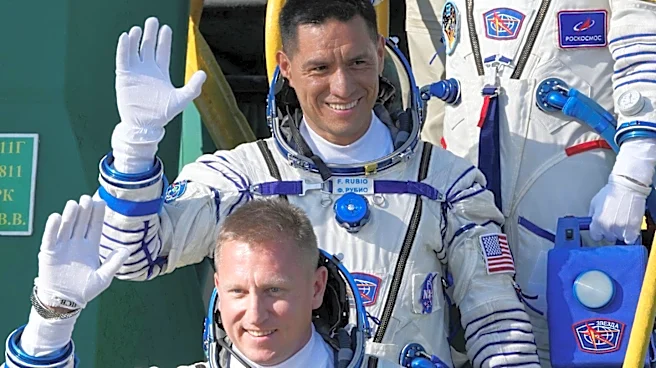
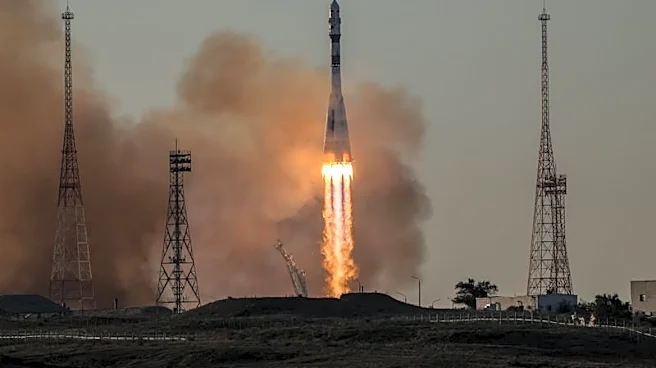
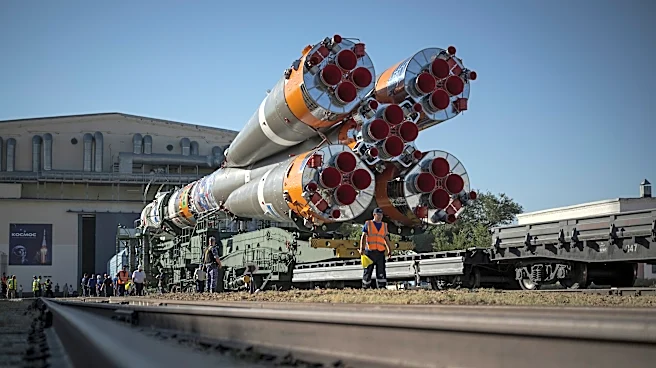
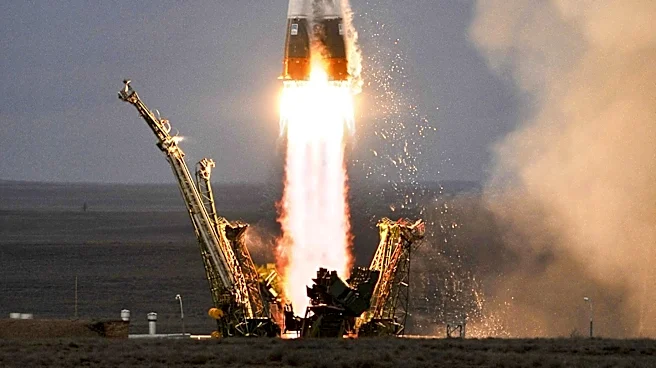
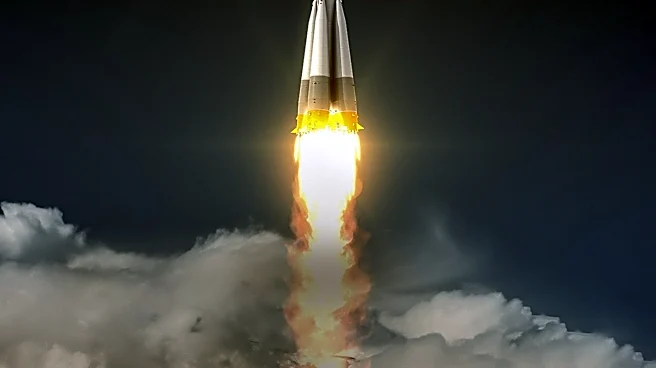
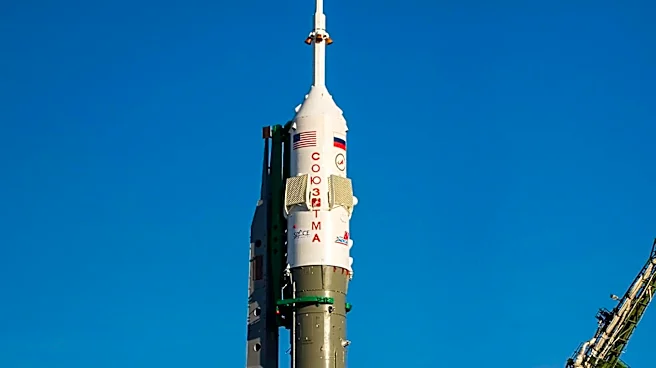
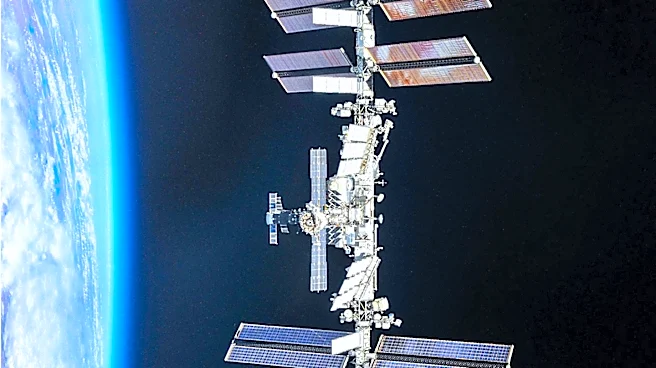
The Soyuz MS-29 spacecraft successfully launched from the Baikonur Cosmodrome in Kazakhstan, carrying NASA astronaut Anil Menon and Roscosmos cosmonauts Pyotr Dubrov and Anna Kikina to the International Space Station (ISS). The launch occurred at 10:47
a.m. EDT, and the spacecraft is set to dock with the ISS after a two-orbit, three-hour journey. This mission marks Menon's first spaceflight, while Dubrov and Kikina are on their second missions. The crew will spend approximately eight months aboard the ISS, conducting various research activities before returning to Earth in April 2027.
Why It's Important?
This mission underscores the ongoing international collaboration in space exploration, particularly between NASA and Roscosmos. The presence of a diverse crew on the ISS facilitates a wide range of scientific research that can benefit multiple fields, including medicine, technology, and environmental science. The mission also highlights the importance of maintaining a continuous human presence in space, which is crucial for future deep-space exploration missions. The data and experiences gathered during this mission will contribute to the broader understanding of long-duration spaceflight and its effects on the human body.
What's Next?
Following the docking, the crew will integrate into the existing ISS team and begin their scheduled research activities. The mission will focus on experiments that require the unique microgravity environment of the ISS. The crew's findings will be crucial for planning future missions, including those aimed at Mars and beyond. Additionally, the mission will provide insights into international cooperation in space, potentially influencing future collaborative projects.