







What's Happening?
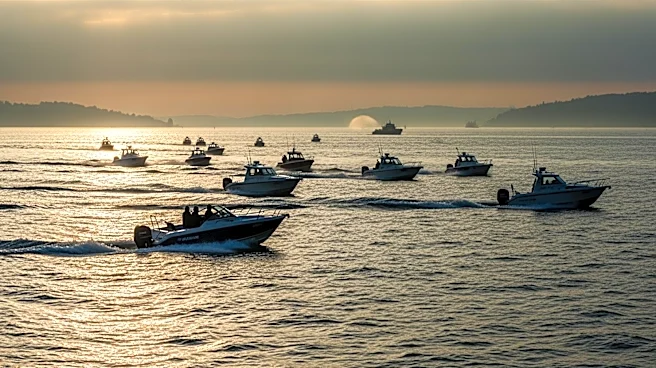
Iran's unconventional naval strategy, known as the 'mosquito fleet,' poses a significant challenge to U.S. military operations in the Strait of Hormuz. This strategy involves the use of small, fast attack boats, drones, and naval mines, which are difficult
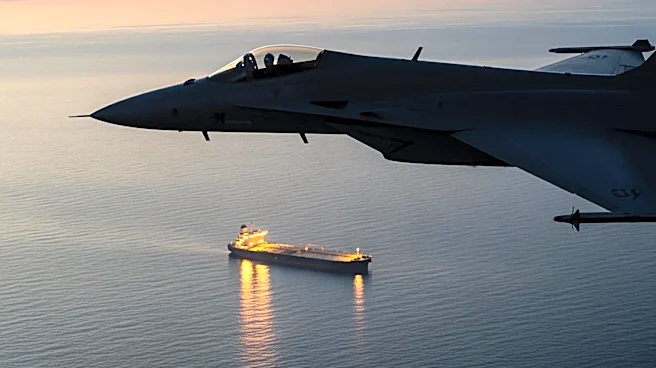
to detect and counter. The Islamic Revolutionary Guards Corps (IRGC) deploys these assets to threaten commercial shipping and U.S. naval forces in the region. Despite the destruction of much of Iran's conventional navy, these tactics allow Iran to maintain a credible threat. The U.S. military has responded by deploying assets like helicopters and drones to track and neutralize these threats. The situation remains tense as Iran continues to leverage its geographical advantage in the narrow strait, a critical chokepoint for global oil shipments.
Why It's Important?
The strategic importance of the Strait of Hormuz cannot be overstated, as it is a vital passage for a significant portion of the world's oil supply. Iran's ability to disrupt shipping through this narrow waterway poses a direct threat to global energy markets and international trade. The U.S. military's efforts to secure the strait are crucial to maintaining the free flow of commerce and ensuring regional stability. However, the asymmetric nature of Iran's naval strategy complicates these efforts, requiring significant resources and strategic planning. The ongoing tensions highlight the broader geopolitical struggle between the U.S. and Iran, with potential implications for international relations and energy security.
What's Next?
The U.S. is likely to continue its efforts to counter Iran's naval tactics through increased military presence and strategic partnerships with regional allies. Diplomatic efforts may also be pursued to de-escalate tensions and negotiate terms that ensure the safe passage of commercial vessels. However, the situation remains volatile, and any miscalculation could lead to further escalation. The international community will be closely monitoring developments, as any disruption in the Strait of Hormuz could have far-reaching economic and political consequences.