



What's Happening?
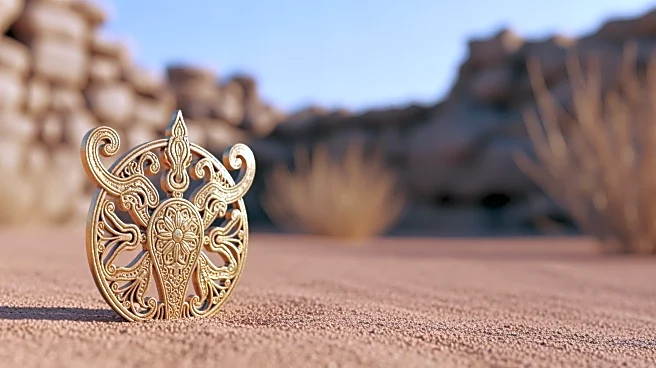
Israeli archaeologists have uncovered a significant archaeological find at the Hyrcania site in the northern Judean Desert, approximately ten miles east of Jerusalem. The discovery includes two gold coins and a delicate gold ring, which have survived
for 1,400 years despite the site's history of antiquities looting. The coins, known as solidi, bear the image of Heraclius, a Byzantine emperor who ruled from 610 to 641 AD. This find was announced by Israel's Coordinator of Government Activities in the Territories (COGAT) and is attributed to the Christian activity in the region during the Byzantine era. The site, originally founded in the late Hellenistic period as a fortress, later became a Christian monastery associated with Saint Sabbas, a key figure in the development of Judean Desert monasticism.
Why It's Important?
The discovery of these artifacts is significant as it provides insight into the Christian monastic life in the Judean Desert during the Byzantine period. It highlights the historical and religious importance of the region, which was a hub for monastic activity. The artifacts not only reflect the religious practices of the time but also underscore the cultural and historical heritage of the area. This find contributes to the understanding of the Byzantine influence in the region and the spread of Christianity. It also emphasizes the importance of preserving archaeological sites that offer a glimpse into the past civilizations and their traditions.
What's Next?
The Archaeology Unit at the Civil Administration, responsible for safeguarding historical heritage in the area, will likely continue its efforts to preserve and study the site. This discovery may lead to further archaeological investigations in the region, potentially uncovering more artifacts that could provide additional insights into the Byzantine period and early Christian traditions. The findings may also be used to enhance public knowledge and appreciation of the region's historical significance, possibly leading to increased interest and tourism in the area.
Beyond the Headlines
This discovery raises questions about the preservation of cultural heritage in conflict zones, as the site is located in the West Bank, an area with complex political dynamics. The protection and study of such sites are crucial for understanding the diverse historical narratives that have shaped the region. Additionally, the find highlights the role of archaeology in bridging cultural and historical gaps, offering a shared heritage that transcends modern political boundaries.