





What's Happening?
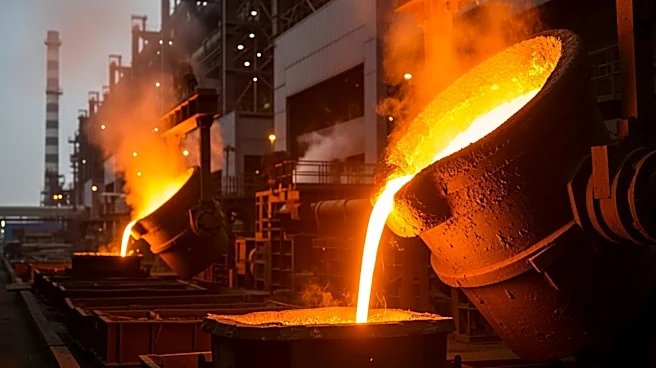
India's steel industry has emerged as a significant driver of the country's industrial growth and self-reliance. As the world's second-largest steel producer since 2018, India has seen its steel consumption more than double over the past 12 years. This
growth has been supported by government initiatives to ensure raw material availability, reduce production costs, and enhance access to global markets. The Production Linked Incentive (PLI) scheme has further bolstered the sector, leading to increased production and job creation. The focus is now shifting towards green steel production to reduce carbon emissions, aligning with India's commitment to achieving net zero emissions by 2070.
Why It's Important?
The expansion of India's steel sector is crucial for the country's economic development and industrial self-sufficiency. By reducing reliance on imports and boosting exports, India strengthens its position in the global market. The sector's growth also contributes to job creation and technological advancements, supporting broader economic objectives. The move towards green steel production reflects a commitment to sustainable development, addressing environmental concerns while maintaining industrial growth. This transition is vital for meeting international climate goals and enhancing India's global competitiveness.
What's Next?
India's steel industry is expected to continue its trajectory of growth, with further investments in technology and infrastructure. The focus on green steel production will likely drive innovation and collaboration within the sector. As India works towards its National Steel Policy targets, the government may introduce additional measures to support sustainable practices and enhance global market access. The industry's evolution will be closely watched by international stakeholders, as it represents a model for balancing industrial growth with environmental responsibility.