


What's Happening?
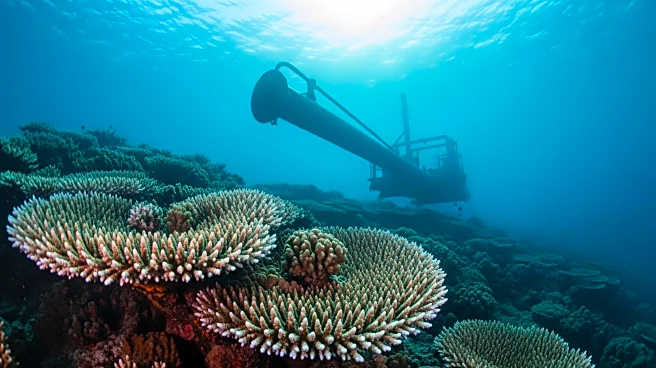
The U.S. Army Corps of Engineers is planning a project to deepen and widen the shipping channel leading into Port Everglades, Florida, which could severely impact one of the last thriving coral reefs in the state. This project involves blasting through
the reef line and dredging sediment, potentially smothering acres of coral. Federal scientists warn that this could result in the largest impact to coral reefs permitted in U.S. history. A similar project at the Port of Miami in 2014 resulted in the death of over half a million corals. The current project could endanger more than 10 million corals, as well as dolphins, sea turtles, and endangered queen conch populations. Despite the environmental risks, port officials argue that the project is necessary to accommodate larger ships, which would boost the regional economy and reduce pollution. Nearly half of the project's $1.35 billion budget is allocated for environmental protection and restoration efforts.
Why It's Important?
The proposed dredging project at Port Everglades highlights the ongoing conflict between economic development and environmental conservation. The expansion is seen as crucial for accommodating larger vessels that are vital for the regional economy, potentially adding $550 million annually. However, the environmental cost could be catastrophic, threatening biodiversity and the ecological balance of Florida's marine life. The destruction of coral reefs not only impacts marine species but also affects local businesses reliant on tourism and diving. The project raises significant concerns about the long-term sustainability of such economic activities if natural resources are depleted. The situation underscores the need for balancing economic growth with environmental stewardship, as the loss of coral reefs could have irreversible consequences for both the ecosystem and the economy.
What's Next?
The project is nearing the end of a prolonged environmental review process. Environmental groups have previously sued the Army Corps, citing violations of environmental laws. The National Oceanic and Atmospheric Administration (NOAA) is finalizing a key environmental opinion that could pave the way for the project's approval. If approved, the project will include measures to mitigate environmental damage, such as coral relocation and the construction of coral nurseries. However, the effectiveness of these measures remains uncertain, as past efforts have shown limited success. The decision will likely face continued opposition from environmentalists and could set a precedent for future infrastructure projects in sensitive ecological areas.
Beyond the Headlines
The potential destruction of Florida's coral reefs raises broader ethical and cultural questions about humanity's responsibility to protect natural habitats. Coral reefs are vital for marine biodiversity and serve as natural barriers against storm surges, protecting coastal communities. The loss of these ecosystems could exacerbate the effects of climate change, leading to more severe weather events and economic losses. The project also highlights the challenges of implementing large-scale environmental restoration efforts, which require significant time, resources, and expertise. The situation calls for a reevaluation of how infrastructure projects are planned and executed, emphasizing the need for sustainable development practices that prioritize ecological preservation.