
What's Happening?
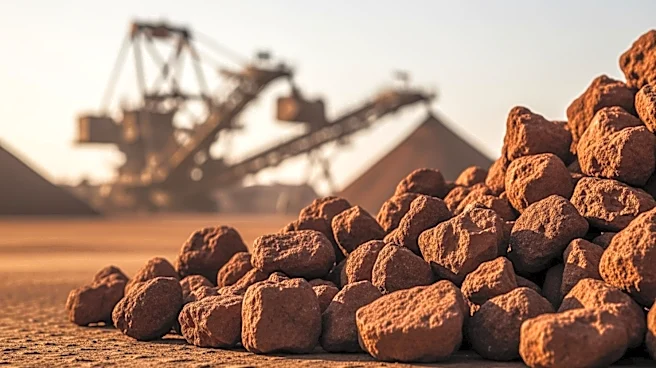
The Simandou iron-ore project in Guinea is poised to become a major force in the global seaborne iron-ore market, according to consultancy Wood Mackenzie (WoodMac). The project is expected to export approximately 16 million tonnes of iron ore this year,
with volumes increasing over time. The development of Simandou has been delayed for over two decades but has gained momentum following Guinea's political changes in 2021. The project is anticipated to displace higher-cost supply, reshaping the competitive landscape and emphasizing higher-quality materials. WoodMac highlights that the ramp-up will be uneven due to infrastructure and logistical challenges. The project is part of a broader trend of African supply development, which includes emerging projects in Gabon, Congo, and Algeria.
Why It's Important?
Simandou's emergence as a key player in the iron-ore market is significant for several reasons. It is expected to alter the competitive dynamics by displacing higher-cost suppliers and reinforcing a shift towards higher-quality materials. This could impact major iron-ore producers, particularly in Australia and Brazil, as they face increased competition. The project also aligns with broader trends in the steel industry, such as decarbonization and the growth of direct reduced iron (DRI) production, which demand high-grade, low-impurity feedstocks. As a result, Simandou's development could lead to structural changes in global trade flows and intensify competition among exporters.
What's Next?
As Simandou continues to ramp up production, stakeholders will need to navigate the challenges of infrastructure and logistics. The project's impact on the market will depend on how quickly and efficiently these issues are addressed. Additionally, the competitive pressure on lower-grade suppliers is likely to increase, prompting them to adapt their strategies. The broader African supply development could further diversify the market and challenge incumbent exporters. Steelmakers will continue to prioritize high-quality raw materials to meet efficiency and emissions reduction goals, reinforcing the demand for premium products.