



What's Happening?
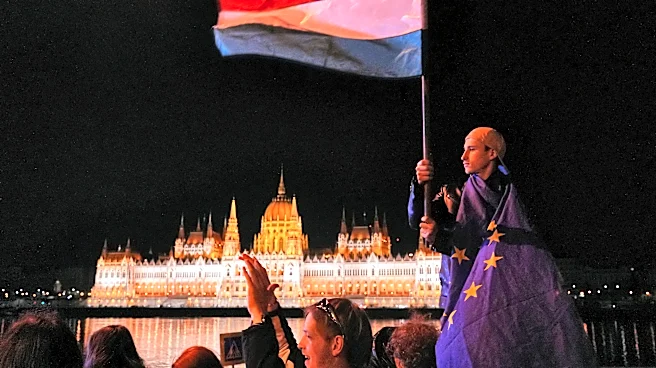
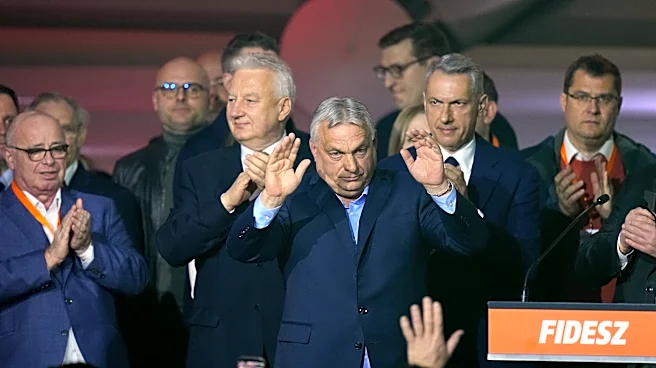
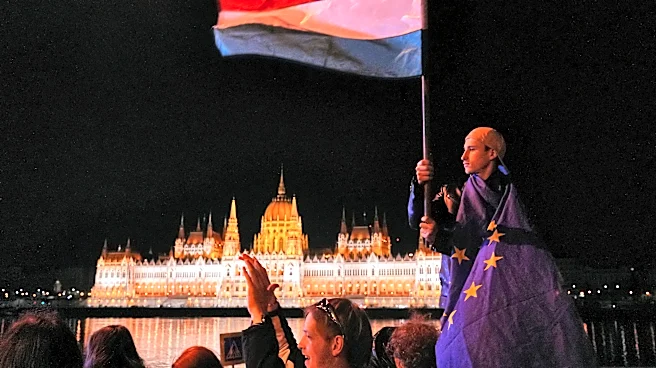
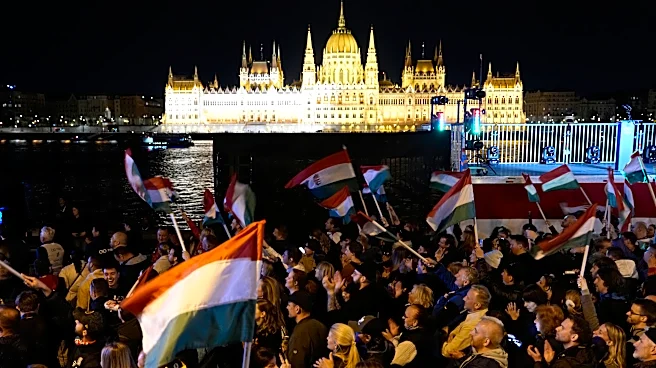
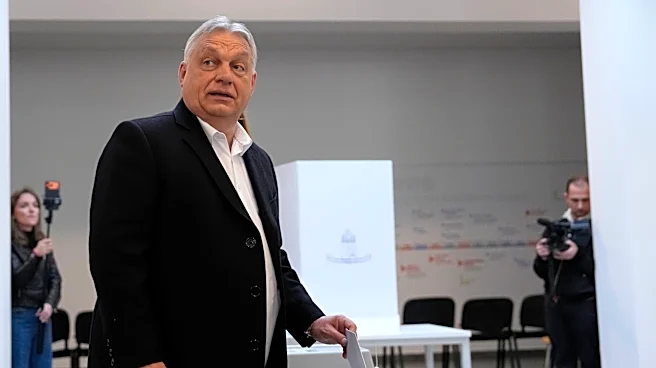
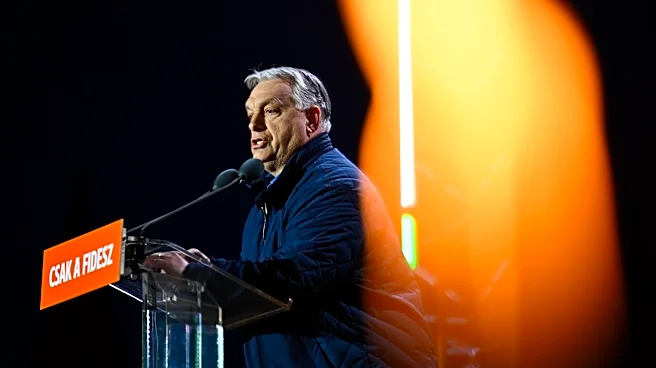
Following the election of Péter Magyar as Hungary's prime minister, the Kremlin has expressed a cautious willingness to engage in pragmatic dialogue with the new Hungarian government. Magyar's victory marks the end of Viktor Orbán's 16-year rule, a period
characterized by close ties with Russia. Despite the change in leadership, Magyar has indicated that Hungary will maintain a pragmatic foreign policy, continuing to purchase Russian oil while seeking to rebalance relations with the West. The Kremlin, acknowledging the loss of a key ally, has categorized Hungary as an 'unfriendly country' but remains open to future cooperation.
Why It's Important?
The shift in Hungary's leadership could have significant implications for European geopolitics, particularly in the context of the EU's stance on Russia. Magyar's approach may lead to a recalibration of Hungary's foreign policy, potentially aligning more closely with EU interests. This change could weaken Russia's influence in Central Europe, as Hungary has been a critical ally for Moscow within the EU. The development also highlights the challenges Russia faces in maintaining alliances in a region where democratic processes can lead to sudden political shifts.
What's Next?
As Magyar assumes office, his administration will need to navigate Hungary's economic dependence on Russian energy while addressing EU expectations for a more unified stance against Russian aggression in Ukraine. The new government may face pressure to diversify energy sources and strengthen ties with Western allies. The international community will be watching closely to see how Hungary's foreign policy evolves under Magyar's leadership and how it impacts EU-Russia relations.