






What's Happening?
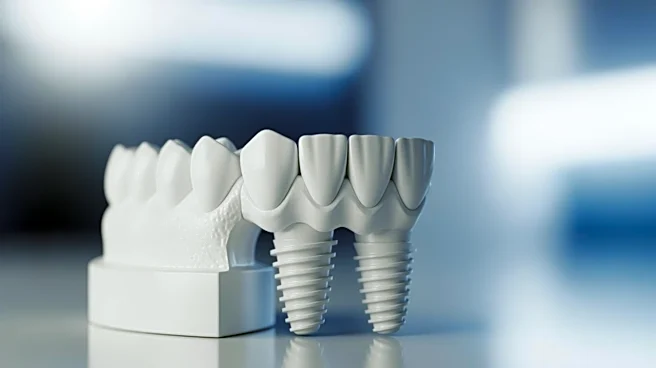
Theradaptive, Inc. has announced the completion of patient enrollment in the RESTORE International Phase I/II Feasibility Study, which evaluates the safety and performance of OsteoAdapt® DE, a regenerative product designed to promote bone growth in alveolar
ridge augmentation. This study marks a critical milestone in advancing bone regeneration for dental reconstruction using Theradaptive's targeted therapeutic platform. The study is supported by the Armed Forces Institute of Regenerative Medicine and aims to address complex craniomaxillofacial procedures, potentially offering new treatment options for patients with limited choices.
Why It's Important?
The completion of the RESTORE study enrollment is a significant step forward in the field of regenerative medicine, particularly for dental reconstruction. OsteoAdapt DE's ability to promote active bone formation could revolutionize surgical outcomes, offering faster healing and improved results compared to traditional graft materials. This advancement has implications for both civilian and military applications, as it is supported by the Department of Defense. The success of this study could lead to broader adoption of regenerative technologies in dental and orthopedic procedures, enhancing patient care and expanding treatment options.
What's Next?
Theradaptive will continue to analyze the data from the RESTORE study to assess the efficacy and safety of OsteoAdapt DE. Positive results could lead to further clinical trials and eventual regulatory approval, paving the way for commercial availability. The company is also exploring additional applications of its OsteoAdapt platform in other therapeutic areas, such as spinal fusion. As the study progresses, stakeholders in the dental and orthopedic fields will be closely monitoring the outcomes, which could influence future research and development in regenerative medicine.
Beyond the Headlines
The study's support from the Armed Forces Institute of Regenerative Medicine highlights the potential military applications of OsteoAdapt DE, particularly in treating injuries sustained in combat. This collaboration underscores the importance of regenerative medicine in enhancing recovery and rehabilitation for service members. Additionally, the study's focus on targeted protein therapeutics reflects a broader trend in biotechnology towards precision medicine, which aims to deliver treatments with high specificity and minimal side effects.