



What's Happening?
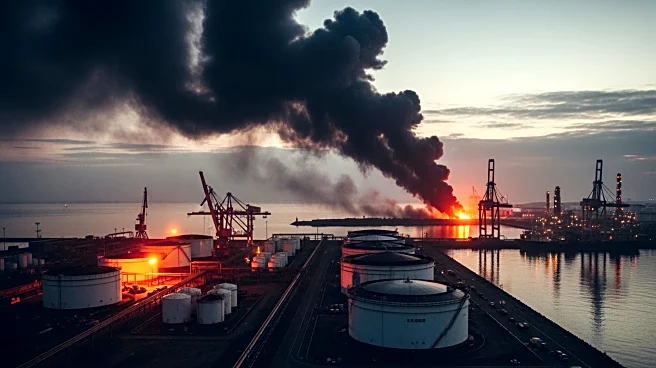
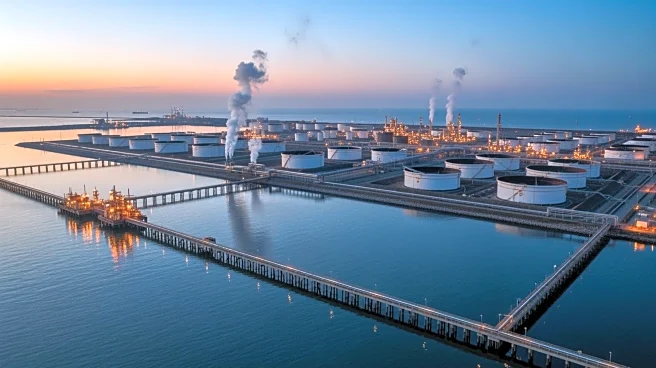
Russia's largest oil port, Primorsk, was severely damaged in a significant air attack by Ukrainian drones. The attack resulted in massive explosions and fires at the port, which processes over a million barrels of oil daily. This incident comes amid already
rising oil prices due to ongoing conflicts, including the war in Iran. The drones targeted fuel storage tanks, causing extensive damage and smoke visible from satellite images. Russian defense systems reportedly intercepted over 70 drones in the Leningrad region during the attack. This is not the first time Primorsk has been targeted; a similar drone attack occurred in September, disrupting oil loading operations. Additionally, the Ust-Luga port was also targeted, leading to a temporary suspension of operations.
Why It's Important?
The attack on Primorsk is significant as it disrupts a major oil supply route, potentially exacerbating the global oil market's volatility. With the price of Russian Urals oil already increasing from $45 to $76 per barrel, further disruptions could lead to higher energy costs worldwide. This incident highlights the strategic importance of energy infrastructure in geopolitical conflicts and the potential for such attacks to influence global economic stability. The ongoing conflict between Ukraine and Russia, coupled with the war in Iran, underscores the interconnectedness of regional conflicts and their broader economic implications.
What's Next?
The immediate consequence of the attack is likely to be a further increase in oil prices, affecting global markets. Russia may respond by bolstering its defense systems around critical infrastructure to prevent future attacks. The international community, particularly countries reliant on Russian oil, may seek alternative energy sources to mitigate supply disruptions. Additionally, diplomatic efforts may intensify to address the escalating conflict between Ukraine and Russia, as well as the broader geopolitical tensions involving Iran.