





What's Happening?
The Daughters of the American Revolution (DAR) Library is launching a $400,000 campaign this #GivingTuesday to restore its facilities from floor to ceiling. This initiative is part of a multi-year effort to return Memorial Continental Hall to its original
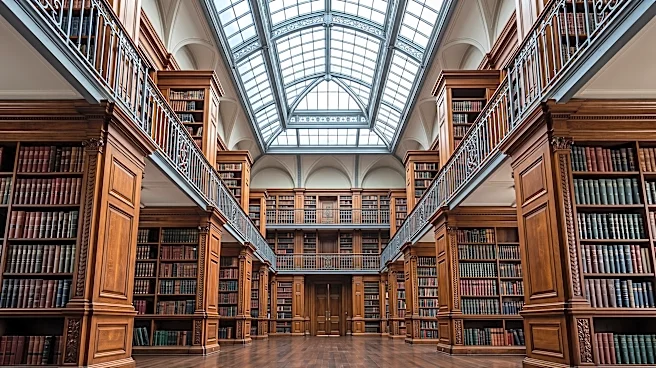
1910 grandeur. The restoration project aims to harmonize the library with its historic character while preparing it for future use by Daughters, researchers, and visitors. Key aspects of the project include replacing mid-20th-century flooring with a historically appropriate design, refinishing original built-in bookcases and adding complementary custom shelving, renewing historic plaster and woodwork, integrating modern wiring and lighting discreetly, and repairing the historic skylight. The DAR emphasizes that this is not about creating something new but preserving what has been entrusted to them and preparing the space for future generations. The campaign seeks to honor the sentiment expressed by President General Estella A. O’Byrne in 1949, who stated that the organization must always move onward and provide facilities for growth.
Why It's Important?
This restoration project is crucial for preserving a significant piece of American history and architectural heritage. The DAR Library, housed within Memorial Continental Hall, serves as a vital resource for genealogical research and historical study, attracting scholars and members from across the U.S. The $400,000 campaign ensures that this treasured space remains functional, aesthetically authentic, and capable of supporting modern technological needs without compromising its historical integrity. By meticulously restoring original features and thoughtfully integrating contemporary infrastructure, the DAR is safeguarding a legacy that connects present and future generations to the nation's past. This effort also highlights the ongoing importance of private philanthropic support in maintaining historical landmarks and cultural institutions, which often rely on such campaigns to fund essential preservation work that public funds may not cover. The project underscores the value of historical continuity and the role of organizations like the DAR in maintaining national memory.
What's Next?
The DAR Library's #GivingTuesday campaign will focus on raising the $400,000 needed to commence and complete the extensive restoration work. Success in this fundraising effort will allow the project to proceed with the planned upgrades, including flooring replacement, millwork refinishing, plaster repair, and electrical modernization. The restoration will likely be executed in phases to minimize disruption to library services, though specific timelines were not detailed. The completion of this project will enhance the library's functionality and aesthetic appeal, potentially attracting more researchers and visitors. It may also serve as a model for other historical preservation efforts within the DAR and similar organizations, demonstrating how to balance historical accuracy with modern utility. Continued fundraising efforts will likely be necessary for ongoing maintenance and future preservation needs of Memorial Continental Hall.
Beyond the Headlines
This restoration project delves deeper than mere physical renovation; it represents a commitment to the enduring value of historical memory and the tangible links to the past. Ethically, it underscores the responsibility of current generations to act as stewards of cultural heritage, ensuring that significant historical spaces are not lost to decay or inappropriate modernization. Legally, such projects often navigate complex preservation laws and regulations, requiring careful planning and execution to meet historical accuracy standards. Culturally, the DAR Library's restoration reinforces the importance of institutions that connect individuals to their ancestral roots and national narrative, fostering a sense of identity and continuity. It also highlights the ongoing dialogue between tradition and progress, demonstrating how modern technology can be integrated into historic settings in a way that respects the past while serving contemporary needs. This effort contributes to a broader national conversation about how best to preserve and utilize historical assets in a rapidly changing world.