







What's Happening?
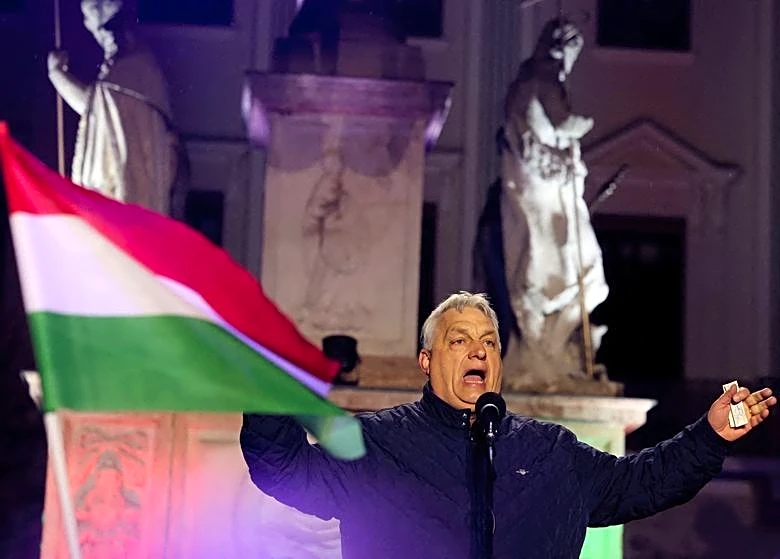
A recent poll conducted by the European Council on Foreign Relations reveals that 77% of Hungarian voters support continued membership in the European Union, despite Prime Minister Viktor Orbán's efforts to portray the EU as an adversary. The poll indicates
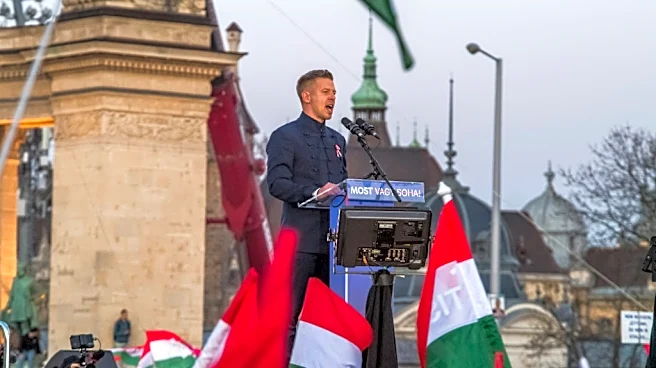
that while Orbán's Fidesz party maintains a significant following, there is a notable desire among voters for recalibrating Hungary's relationship with the EU. The survey also highlights skepticism towards financial support for Ukraine, with only 26% of respondents endorsing such aid. The poll comes ahead of Hungary's general election, where Orbán faces a challenge from Peter Magyar, leader of the Tisza party, who advocates for a more cooperative stance with the EU.
Why It's Important?
The findings of the poll are significant as they suggest a disconnect between Prime Minister Orbán's foreign policy stance and the preferences of the Hungarian electorate. This could impact Hungary's future interactions with the EU, especially if the opposition party gains more influence. The skepticism towards supporting Ukraine also reflects broader geopolitical tensions and could affect Hungary's role within the EU and NATO. The election results may influence Hungary's domestic and foreign policy, particularly in areas such as justice, migration, and LGBTQ+ rights, which have been contentious points between Hungary and Brussels.
What's Next?
As Hungary approaches its general election, the outcome will determine the country's future direction in EU relations. If Peter Magyar's Tisza party gains power, there may be a shift towards a more cooperative approach with the EU. However, the election is expected to be closely contested, with many voters still undecided. The results could lead to changes in Hungary's foreign policy, especially regarding its stance on Ukraine and EU membership. Political leaders and stakeholders within the EU will be closely monitoring the election, as it could have implications for regional stability and cooperation.
Beyond the Headlines
The poll results highlight underlying tensions within Hungary regarding its national identity and place within the European community. The desire for change in EU relations suggests a potential shift in public sentiment towards more integration and cooperation, which could influence Hungary's long-term political and economic strategies. Additionally, the skepticism towards supporting Ukraine may reflect broader concerns about national security and economic priorities, which could shape Hungary's foreign policy decisions in the coming years.